
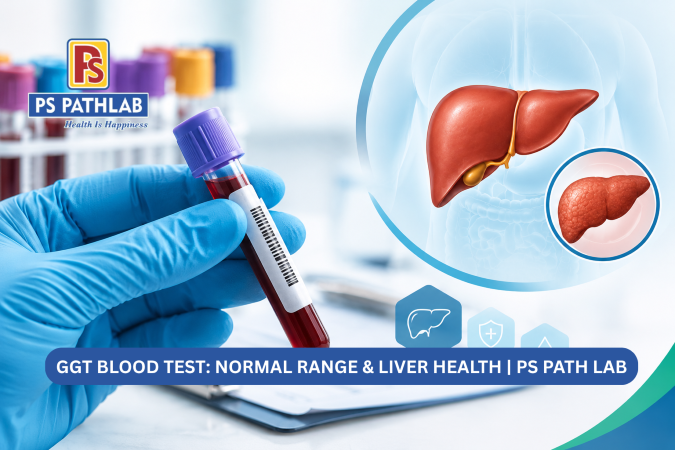
GGT Blood Test: What Can It Tell You About Liver Health?
Your liver plays an essential role in digestion, metabolism, and removing harmful substances from your body. However, liver problems may not always cause noticeable symptoms in the early stages. Blood tests can help doctors evaluate liver health, and one such test is the GGT blood test.
The Gamma-Glutamyl Transferase (GGT) test measures the level of the GGT enzyme in your blood. It can help identify possible liver or bile duct problems when interpreted alongside other liver function tests and your medical history.
If you are looking for reliable information about the GGT blood test in Pitampura, Delhi, this guide from PS Path Lab explains its uses, normal ranges, causes of elevated levels, and when testing may be recommended.
What Is a GGT Blood Test?
A GGT blood test measures the amount of gamma-glutamyl transferase, an enzyme found mainly in the liver but also present in other tissues.
When liver cells or bile ducts are affected, GGT levels may increase in the bloodstream. Doctors may recommend this test when investigating possible liver conditions or evaluating abnormal results from other blood tests.
The GGT test is commonly used to:
- Help assess possible liver damage.
- Investigate suspected bile duct problems.
- Support the evaluation of abnormal liver function test results.
- Help interpret elevated alkaline phosphatase (ALP) levels.
- Monitor certain liver conditions when advised by a doctor.
Important: A GGT test alone cannot diagnose a specific liver disease. Your doctor will interpret the result alongside your symptoms, medical history, and other investigations.
What Can a GGT Test Tell You About Liver Health?
GGT levels provide useful information about possible liver and bile duct abnormalities. Depending on your medical history and other test results, your doctor may use the findings to investigate several conditions.
1. Possible Liver Injury
Elevated GGT levels may occur with liver inflammation or injury. Possible causes include fatty liver disease, viral hepatitis, alcohol-related liver disease, and certain medications.
2. Bile Duct Problems
The bile ducts carry bile from the liver to the digestive system. Conditions that obstruct or affect these ducts may increase GGT levels.
3. Alcohol-Related Liver Changes
Alcohol consumption can raise GGT levels in some people. However, an elevated result does not prove alcohol misuse or confirm alcohol-related liver disease.
4. Further Evaluation of Abnormal Liver Tests
Doctors may order a GGT test with other investigations, such as ALT, AST, ALP, and bilirubin, to better understand abnormal liver-related results.
What Is the Normal GGT Blood Test Range?
The normal GGT range can vary depending on the laboratory, testing method, age, and sex.
Many adult laboratory reference ranges are approximately:
- Men: 10–70 U/L
- Women: 6–40 U/L
These figures are examples, not universal cutoffs. Always refer to the reference interval printed on your laboratory report.
A result within the reference range does not rule out every liver condition, and an elevated result does not automatically mean serious disease.
What Causes High GGT Levels?
Several factors may contribute to elevated GGT levels, including:
- Fatty liver disease.
- Alcohol consumption.
- Hepatitis and other liver conditions.
- Bile duct obstruction or disease.
- Certain prescription medicines.
- Other medical conditions that affect the liver.
Your doctor may recommend additional blood tests, imaging, or follow-up testing depending on how high the result is and whether you have other symptoms.
What Are the Symptoms of Liver Problems?
Liver conditions may not cause symptoms in their early stages. When symptoms occur, they can include:
- Persistent tiredness or weakness.
- Yellowing of the skin or eyes.
- Dark-coloured urine.
- Pale stools.
- Abdominal discomfort, particularly in the upper right side.
- Unexplained nausea or loss of appetite.
- Itching without an obvious cause.
These symptoms can have different causes. Seek prompt medical evaluation if they develop. Severe abdominal pain, confusion, or significant bleeding requires urgent medical attention.
Do You Need Fasting Before a GGT Blood Test?
Fasting is not always necessary for a GGT blood test performed on its own. However, fasting may be required if your doctor has ordered other tests at the same time.
Before your test:
- Follow the instructions provided by your doctor or laboratory.
- Tell your healthcare professional about medicines and supplements you take.
- Ask whether you need to avoid food or drinks before sample collection.
- Do not stop prescribed medicines without medical advice.
Alcohol can affect GGT levels, so discuss any required preparation with your doctor. Do not change your alcohol consumption solely to alter a test result.
GGT Test vs. Liver Function Test (LFT)
A GGT test measures one specific enzyme, while a liver function test generally includes several blood measurements.
TestWhat it helps assess
GGT | Possible liver or bile duct abnormalities
ALT | Liver cell injury
AST | Liver cell injury and other tissue damage
ALP | Bile duct problems and certain bone conditions
Bilirubin | Processing and removal of a pigment produced when red blood cells break down
Albumin | The liver's protein-producing function, among other clinical factors
The exact tests included in an LFT panel vary by laboratory.
When Should You Get a GGT Blood Test?
Your doctor may recommend a GGT test if:
- Other liver blood tests are abnormal.
- You have symptoms suggesting a liver or bile duct problem.
- You need evaluation or monitoring for a known liver condition.
- Your doctor needs to investigate an elevated ALP result.
- You require follow-up testing as part of a medical treatment plan.
Routine testing decisions should be based on your symptoms, risk factors, and your doctor's advice.
Where Can You Get a GGT Blood Test in Pitampura, Delhi?
If your doctor has recommended a GGT blood test or liver function test, choosing a diagnostic laboratory that follows appropriate sample-handling and quality-control procedures is important.
PS Path Lab provides diagnostic laboratory services, including blood testing and other pathology investigations. If you are searching online for a GGT blood test or liver function test in Pitampura, Delhi, contact the laboratory to confirm test availability, preparation requirements, sample collection options, and report turnaround time.
Choose testing based on medical advice, and consult your doctor to understand what your results mean.
Frequently Asked Questions (FAQs)
1. What is a GGT blood test used for?
A GGT blood test measures an enzyme that may increase with liver injury or bile duct problems. It is usually interpreted with other liver tests and clinical findings.
2. Does high GGT always mean liver disease?
No. High GGT can have several causes, including alcohol consumption, certain medicines, and liver or bile duct conditions. Further assessment may be necessary.
3. Can a GGT test detect fatty liver?
GGT levels may be elevated in people with fatty liver disease, but the test cannot diagnose fatty liver on its own. A doctor may recommend additional tests or imaging.
4. Is the GGT test included in an LFT?
Some liver function test panels include GGT, while others do not. Confirm the components of the test package with your laboratory.
5. How can I reduce high GGT levels?
Management depends on the underlying cause. Your doctor may recommend addressing the relevant medical condition, reviewing medications, avoiding alcohol when appropriate, and making suitable lifestyle changes. Do not rely on supplements or home remedies as a substitute for medical evaluation.
6. Where can I get a GGT blood test in Pitampura?
You can contact PS Path Lab to confirm GGT test availability, pricing, sample collection arrangements, and reporting timelines.
Conclusion
The GGT blood test is a useful tool for evaluating possible liver and bile duct problems. However, the result should always be interpreted alongside other liver tests, symptoms, and medical history.
If you have been advised to undergo a GGT blood test or liver function test, contact PS Path Lab in Pitampura, Delhi, for information about available testing services. Early medical evaluation and appropriate follow-up can help you make informed decisions about your liver health.
Disclaimer: This article is intended for educational purposes only and is not a substitute for professional medical advice, diagnosis, or treatment.