
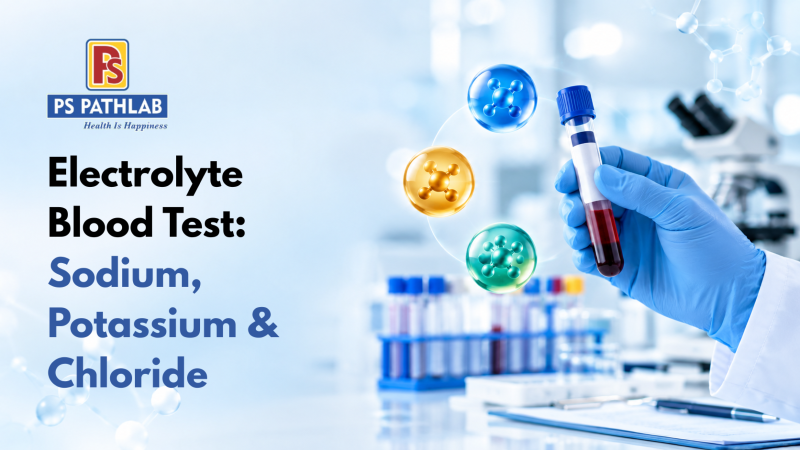
Electrolyte Blood Test: Sodium, Potassium, and Chloride Explained
Electrolytes play an important role in maintaining the body's fluid balance, supporting nerve function, helping muscles contract, and regulating several essential body processes. When electrolyte levels become too high or too low, they may affect your overall health.
An electrolyte blood test measures important minerals in your blood, including sodium, potassium, and chloride. Doctors may recommend this test to investigate symptoms such as weakness, muscle cramps, dehydration, or an irregular heartbeat, or to monitor certain medical conditions.
At PS PathLab, we believe that understanding your diagnostic tests is an important step towards better health. This guide explains what an electrolyte blood test measures, normal electrolyte levels, common causes of imbalance, and when testing may be recommended.
What Is an Electrolyte Blood Test?
An electrolyte blood test is a laboratory test that measures the levels of specific electrolytes in your blood. These electrically charged minerals help regulate fluid balance, maintain acid-base balance, and support normal nerve and muscle activity.
The test commonly measures:
- Sodium (Na⁺): Helps regulate fluid balance and supports nerve and muscle function.
- Potassium (K⁺): Plays a vital role in muscle contraction, nerve signaling, and normal heart rhythm.
- Chloride (Cl⁻): Helps maintain fluid balance and supports the body's acid-base balance.
Depending on the test ordered, other measurements, such as bicarbonate or total carbon dioxide, may also be included.
An electrolyte test may be performed on its own or as part of a broader metabolic panel or kidney function evaluation.
What Do Sodium, Potassium, and Chloride Do in the Body?
1. Sodium: Maintaining Fluid Balance
Sodium is the major positively charged electrolyte in the fluid outside your body's cells. It helps regulate the amount of water in the body and supports normal nerve and muscle function.
What can abnormal sodium levels indicate?
- Low sodium levels, known as hyponatremia, may occur due to certain medications, hormonal conditions, heart or kidney problems, or excess water relative to sodium.
- High sodium levels, known as hypernatremia, may develop when the body loses too much water or does not receive enough water.
Possible symptoms include nausea, headache, weakness, confusion, and, in severe cases, seizures. Some people may have no obvious symptoms.
2. Potassium: Supporting Muscles and Heart Function
Potassium is essential for normal electrical signalling in nerves and muscles, including the heart muscle.
What can abnormal potassium levels indicate?
- Low potassium levels, called hypokalemia, may result from vomiting, diarrhea, certain diuretics, or other medical conditions.
- High potassium levels, called hyperkalemia, may be associated with kidney problems, certain medications, or other conditions affecting potassium regulation.
Abnormal potassium levels may cause muscle weakness, cramps, or abnormal heart rhythms. Severe abnormalities can be dangerous, even when symptoms are mild or absent.
3. Chloride: Supporting Fluid and Acid-Base Balance
Chloride works alongside sodium and other electrolytes to maintain fluid balance and help regulate the body's acid-base status.
What can abnormal chloride levels indicate?
- Low chloride levels may occur with prolonged vomiting, certain medications, or some acid-base disturbances.
- High chloride levels may occur with dehydration, certain kidney conditions, or disturbances in the body's acid-base balance.
Chloride results are usually interpreted alongside sodium, bicarbonate, kidney function, and the person's overall clinical condition.
What Is the Normal Range for Sodium, Potassium, and Chloride?
The following are commonly used adult reference ranges. Actual ranges can vary by laboratory, testing method, age, and clinical circumstances.
Electrolyte Typical Adult Reference Range
Sodium | 135–145 mmol/L
Potassium | 3.5–5.0 mmol/L
Chloride | 98–106 mmol/L
Important: Always refer to the reference ranges printed on your laboratory report. A result outside the reference range does not establish a diagnosis by itself. A healthcare professional should interpret it alongside your symptoms, medical history, medications, and other test results.
What Are the Symptoms of Electrolyte Imbalance?
Electrolyte imbalances may develop due to fluid loss, certain illnesses, medication effects, or problems with the kidneys and other organs.
Common symptoms may include:
- Unusual tiredness or weakness
- Muscle cramps or spasms
- Nausea or vomiting
- Headache
- Excessive thirst
- Confusion or difficulty concentrating
- Changes in heartbeat or palpitations
Symptoms vary depending on which electrolyte is affected and how quickly the level changes. Some imbalances do not cause noticeable symptoms.
Seek urgent medical attention for severe confusion, seizures, fainting, chest pain, or a significant or persistent abnormal heartbeat.
What Causes Electrolyte Imbalance?
Several factors can contribute to abnormal electrolyte levels, including
- Dehydration: Heavy sweating, fever, vomiting, or diarrhea can disturb fluid and electrolyte balance.
- Kidney problems: The kidneys help regulate electrolyte levels by controlling how much is retained or removed.
- Medications: Certain diuretics and other medicines can change sodium or potassium levels.
- Hormonal conditions: Some hormonal disorders affect the body's regulation of water and electrolytes.
- Prolonged illness: Certain digestive, metabolic, or other medical conditions can contribute to imbalances.
- Excessive fluid intake or loss: Changes in water balance can affect electrolyte concentrations.
The cause cannot always be identified from the electrolyte test alone. A doctor may recommend additional blood or urine tests when necessary.
Who Should Consider an Electrolyte Blood Test?
A doctor may recommend an electrolyte blood test if you:
- Have symptoms that could be related to an electrolyte imbalance.
- Have experienced significant vomiting, diarrhea, or fluid loss.
- Need monitoring for a kidney, heart, or other medical condition.
- Take medicines that may affect electrolyte levels.
- Require monitoring during certain treatments or hospital care.
- Need an assessment of fluid balance as part of a broader medical evaluation.
Not everyone needs an electrolyte test routinely. Your healthcare professional can advise whether it is appropriate for your symptoms and medical history.
Does an Electrolyte Blood Test Require Fasting?
Fasting is not always required for an electrolyte blood test performed on its own. However, fasting may be necessary if the test is ordered alongside other investigations that require it.
Before your appointment:
- Follow the instructions provided by your doctor or laboratory.
- Tell your healthcare professional about medicines and supplements you take.
- Do not stop prescribed medicines unless your doctor instructs you to.
- Ask whether fasting is needed if multiple blood tests have been ordered.
The test generally involves collecting a blood sample from a vein in your arm.
Electrolyte Blood Test vs. Kidney Function Test (KFT)
An electrolyte test and a kidney function test (KFT) can provide related but different information.
FeatureElectrolyte Blood TestKidney Function Test (KFT)
Main purpose | Measures selected electrolytes | Evaluates kidney function and related blood markers
Common measurements | Sodium, potassium, chloride | Often includes creatinine, urea, and other markers; electrolytes may also be included
What it helps assess: fluid, electrolyte, and acid-base balance; kidney filtration; and possible kidney-related abnormalities.
Is it the same test? | No | No
Doctors may order both tests when investigating dehydration, kidney-related concerns, or abnormal electrolyte levels. The exact tests included depend on the laboratory's test panel and the doctor's request.
Where Can You Get an Electrolyte Blood Test in Pitampura, Delhi?
If your doctor has recommended an electrolyte blood test, choosing a diagnostic laboratory that follows appropriate sample-handling and quality-control procedures is important.
PS PathLab provides diagnostic testing services for people seeking laboratory investigations in Pitampura, Delhi. Patients can contact the laboratory to confirm the availability of an electrolyte blood test, current pricing, preparation instructions, and whether home sample collection is available for their location.
PS PathLab — Health to Happiness
- Address: 198 Deepali Enclave, Pitampura, Basement, Delhi – 110034
- Phone: +91 96674 92046
- Website: https://www.pspathlab.com
Contact PS PathLab before visiting to confirm test availability, sample collection arrangements, and any preparation requirements.
Frequently Asked Questions (FAQs)
1. What is an electrolyte blood test?
An electrolyte blood test measures minerals such as sodium, potassium, and chloride in the blood. It helps assess fluid balance and the body's electrolyte status.
2. What are normal sodium, potassium, and chloride levels?
Typical adult ranges are sodium 135–145 mmol/L, potassium 3.5–5.0 mmol/L, and chloride 98–106 mmol/L. Laboratory reference ranges may differ.
3. Can dehydration cause an electrolyte imbalance?
Yes. Dehydration caused by fluid loss, vomiting, diarrhea, or heavy sweating can disturb electrolyte balance. The specific changes depend on the amount and type of fluid lost and the body's response.
4. Can kidney problems affect electrolyte levels?
Yes. The kidneys help regulate sodium, potassium, chloride, and water balance. Certain kidney conditions can affect these levels, although an electrolyte test alone cannot diagnose kidney disease.
5. Is fasting necessary before an electrolyte test?
Fasting is generally not required for an electrolyte test alone, but it may be necessary when other tests are ordered at the same time. Follow your laboratory's instructions.
6. How long does an electrolyte blood test take?
Blood collection usually takes only a few minutes. The time needed for results depends on the laboratory's processing procedures. Ask your diagnostic laboratory for its current turnaround time.
7. How much does an electrolyte blood test cost in Pitampura, Delhi?
The price depends on the laboratory, the tests included, and any additional services. Contact PS PathLab at +91 96674 92046 to confirm the current price and availability.
8. Can I get an electrolyte blood test with home sample collection?
Home sample collection may be available depending on your location and the laboratory's service coverage. Contact PS PathLab to confirm availability in your area.
Conclusion
Sodium, potassium, and chloride are essential electrolytes that support fluid balance, nerve signalling, muscle activity, and other important body functions. An electrolyte blood test can help doctors investigate suspected imbalances and monitor certain health conditions.
Understanding your laboratory results is important, but abnormal values should always be interpreted in the context of your symptoms and medical history. Follow your healthcare professional's advice regarding testing, treatment, and follow-up.
For electrolyte blood test availability and preparation information in Pitampura, Delhi, contact PS PathLab.