

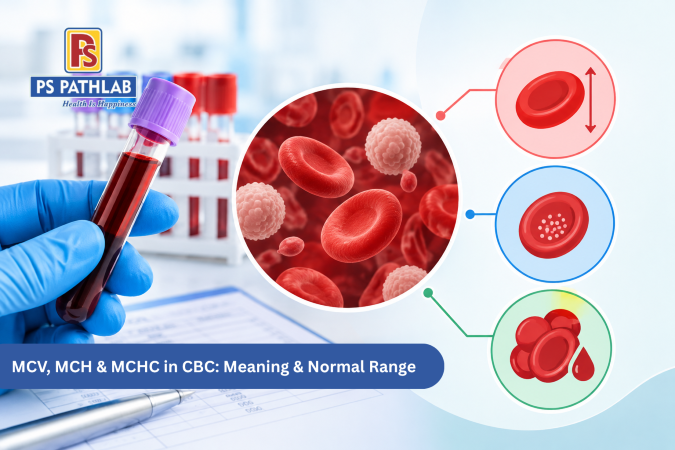
MCV, MCH, and MCHC in CBC: What Do These Values Mean?
Have you ever looked at your Complete Blood Count (CBC) report and wondered what MCV, MCH, and MCHC mean? These three values are important red blood cell (RBC) indices that help doctors understand the size of your red blood cells and how much hemoglobin they contain.
Understanding these values can help you learn more about your blood health and identify patterns that may be associated with anemia, iron deficiency, or vitamin deficiencies.
At PS PathLab, we believe that understanding your diagnostic reports is an important step towards better health. In this guide, we explain MCV, MCH, and MCHC in simple language, including their normal ranges and what high or low values may indicate.
What Are MCV, MCH, and MCHC in a CBC Test?
A Complete Blood Count (CBC) is a commonly performed blood test that measures different components of your blood, including red blood cells, white blood cells, platelets, and hemoglobin.
Three important red blood cell indices included in many CBC reports are
- MCV (Mean Corpuscular Volume): Measures the average size of your red blood cells.
- MCH (Mean Corpuscular Hemoglobin): Measures the average amount of hemoglobin in each red blood cell.
- MCHC (Mean Corpuscular Hemoglobin Concentration): Measures the average concentration of hemoglobin within red blood cells.
Doctors interpret these values alongside hemoglobin, RBC count, RDW, and other findings to understand possible causes of anemia and other blood-related conditions.
1. What Is MCV in a Blood Test?
MCV stands for mean corpuscular volume. It indicates the average size or volume of your red blood cells.
Red blood cells carry oxygen from your lungs to the rest of your body with the help of hemoglobin.
What Is the Normal MCV Range?
A commonly used adult reference range is approximately 80–100 femtoliters (fL). However, the normal range may vary between laboratories and according to age.
What Does Low MCV Mean?
A low MCV means that your red blood cells are smaller than usual. This is called microcytosis.
Possible causes include:
- Iron deficiency
- Thalassemia trait
- Certain chronic inflammatory conditions
- Less commonly, other disorders affecting hemoglobin production
Doctors may recommend additional tests, such as serum ferritin and iron studies, depending on your CBC results and medical history.
What Does High MCV Mean?
A high MCV means that your red blood cells are larger than usual. This is called macrocytosis.
Possible causes include:
- Vitamin B12 deficiency
- Folate deficiency
- Certain liver conditions
- Alcohol use
- Some medications
- Certain thyroid or bone marrow disorders
An elevated MCV does not automatically mean you have a vitamin deficiency. Your doctor may recommend further investigations based on your symptoms and other test results.
2. What Is MCH in a Blood Test?
MCH stands for mean corpuscular hemoglobin. It measures the average amount of hemoglobin present in each red blood cell.
Hemoglobin is the protein responsible for carrying oxygen throughout your body.
What Is the Normal MCH Range?
A commonly used adult reference range is approximately 27–33 picograms (pg) per cell. The range printed on your laboratory report should be used for comparison.
What Does Low MCH Mean?
Low MCH indicates that each red blood cell contains less hemoglobin than usual.
It may be associated with:
- Iron deficiency anemia
- Thalassemia trait
- Certain conditions affecting hemoglobin production
Low MCH may occur alongside low MCV, but the two values measure different things: MCV measures cell size, while MCH measures the amount of hemoglobin per cell.
What Does High MCH Mean?
High MCH means that the average amount of hemoglobin per red blood cell is higher than the laboratory reference range.
It may occur when red blood cells are larger than usual, such as in some cases of vitamin B12 or folate deficiency. However, MCH must be interpreted with MCV and other CBC findings rather than on its own.
3. What Is MCHC in a Blood Test?
MCHC stands for mean corpuscular hemoglobin concentration. It measures the average concentration of hemoglobin inside red blood cells.
Unlike MCH, which measures the total amount of hemoglobin per cell, MCHC measures how concentrated that hemoglobin is within the cells.
What Is the Normal MCHC Range?
A commonly used adult reference range is approximately 32–36 grams per deciliter (g/dL). Your laboratory may use a slightly different range.
What Does Low MCHC Mean?
Low MCHC indicates that the hemoglobin concentration in red blood cells is lower than usual. This is sometimes described as hypochromia.
Possible causes include:
- Iron deficiency
- Certain types of thalassemia
- Other conditions that affect hemoglobin production
A doctor may consider ferritin and other iron studies to investigate possible iron deficiency.
What Does High MCHC Mean?
High MCHC is less common and may be associated with conditions such as hereditary spherocytosis. It can also occur because of laboratory interference or sample-related factors.
Your doctor may recommend reviewing the CBC report or repeating the test if the result is unexpected.
MCV vs MCH vs MCHC: What Is the Difference?
Parameter: What It Measures Common Adult Reference Range
MCV | Average red blood cell size | 80–100 fL
MCH | Average hemoglobin amount per red blood cell | 27–33 pg
MCHC | Average hemoglobin concentration in red blood cells | 32–36 g/dL
These are commonly used reference ranges, not universal diagnostic cut-offs. Always check the reference interval provided by your laboratory.
How Are MCV, MCH, and MCHC Related to Anemia?
Anemia occurs when your body does not have enough healthy red blood cells or sufficient hemoglobin to carry oxygen effectively.
MCV, MCH, and MCHC help doctors classify patterns that may be associated with different types of anemia.
- Low MCV and low MCH: May occur with iron deficiency or thalassemia.
- Normal MCV with low hemoglobin: May occur in several types of anemia, including early iron deficiency or anemia associated with chronic disease.
- High MCV: May be associated with vitamin B12 deficiency, folate deficiency, or other conditions.
- Low MCHC: May suggest reduced hemoglobin concentration in red blood cells.
These patterns are clues rather than final diagnoses. Your doctor may consider symptoms, medical history, hemoglobin levels, RBC count, RDW, ferritin, vitamin B12, folate, and other investigations before determining the cause.
Which Tests May Be Needed if MCV, MCH, or MCHC Is Abnormal?
Depending on the CBC findings, your doctor may recommend additional tests, such as:
- Serum ferritin: Helps assess the body's iron stores.
- Iron studies: May include serum iron, transferrin or TIBC, and transferrin saturation.
- Vitamin B12 test: Helps evaluate possible vitamin B12 deficiency.
- Folate test: May be used when folate deficiency is suspected.
- Peripheral blood smear: Allows examination of blood cell appearance under a microscope.
- Hemoglobin analysis: May be considered when a hemoglobin disorder, such as thalassemia, is suspected.
Not everyone with an abnormal MCV, MCH, or MCHC needs all these tests. The appropriate investigations depend on the complete clinical picture.
When Should You Consider a CBC Test?
A doctor may recommend a CBC test if you experience symptoms such as persistent fatigue, weakness, pale skin, dizziness, or breathlessness, or if you need routine health monitoring.
These symptoms can have many causes, so a CBC result should be interpreted alongside a medical assessment. Do not start iron, vitamin B12, or folate supplements solely on the basis of an abnormal red blood cell index without appropriate medical advice.
Get a CBC test at PS PathLab in Pitampura, Delhi.
If you need a complete blood count test, PS PathLab offers diagnostic testing services for people seeking reliable blood testing in Pitampura, Delhi.
Our aim is to make diagnostic testing convenient and help patients take informed steps towards better health.
Why consider PS PathLab?
- Diagnostic testing for routine health assessments
- CBC testing and other blood investigations
- Convenient laboratory services in Pitampura, Delhi
- Home sample collection availability—contact the lab to confirm service coverage and scheduling
PS PathLab
Address: 198 Deepali Enclave, Pitampura, Basement, Delhi – 110034
Phone: +91 96674 92046
Website: https://www.pspathlab.com
Contact PS PathLab for current CBC test pricing, sample collection availability, and appointment details.
Frequently Asked Questions (FAQs)
1. What do MCV, MCH, and MCHC mean in a CBC report?
MCV measures the average size of red blood cells, MCH measures the average amount of hemoglobin per cell, and MCHC measures the average concentration of hemoglobin inside red blood cells.
2. What is the normal range of MCV, MCH, and MCHC?
Common adult reference ranges are MCV 80–100 fL, MCH 27–33 pg, and MCHC 32–36 g/dL. Reference ranges vary by laboratory and patient characteristics.
3. Does low MCV mean iron deficiency?
Low MCV can be associated with iron deficiency, but it can also occur in thalassemia and other conditions. Ferritin and other investigations may help identify the cause.
4. What does low MCH and low MCHC mean?
These findings indicate reduced hemoglobin content or concentration in red blood cells. They may occur in iron deficiency and certain hemoglobin disorders, but further evaluation is needed.
5. Can high MCV indicate vitamin B12 deficiency?
Yes. Vitamin B12 deficiency can cause larger-than-usual red blood cells and an elevated MCV. Folate deficiency, certain medications, liver conditions, and other disorders may also cause high MCV.
6. Can a CBC test detect anemia?
A CBC measures hemoglobin and other blood components and can help identify anemia. Additional tests may be needed to determine its underlying cause.
7. Do abnormal MCV, MCH, and MCHC values always mean a serious problem?
No. Mild abnormalities may have several explanations, including temporary changes or laboratory factors. A doctor should interpret them in the context of your overall report and health.
8. Where can I get a CBC test in Pitampura, Delhi?
You can contact PS PathLab in Pitampura, Delhi, to enquire about CBC testing, current prices, appointments, and home sample collection.
Conclusion
MCV, MCH, and MCHC are important components of a CBC report that help explain the size of red blood cells and their haemoglobin content. Low or high values may provide clues about iron deficiency, vitamin deficiencies, thalassaemia, and other conditions, but they cannot establish a diagnosis on their own.
Understanding your CBC report is a useful first step towards better health. For CBC testing and other diagnostic services in Pitampura, Delhi, contact PS PathLab for more information.
Medical disclaimer: This article is for general educational purposes only and is not a substitute for professional medical advice, diagnosis, or treatment. Consult a qualified healthcare professional for interpretation of your test results.