
Polycystic Ovarian Disease (PCOD) is one of the most common hormonal disorders affecting women of reproductive age. It can lead to irregular periods, weight gain, acne, excessive facial hair, infertility, and metabolic problems. While symptoms provide important clues, blood tests are essential for confirming the diagnosis and identifying hormonal imbalances.
This comprehensive guide explains the blood tests recommended for PCOD, why they are important, how to prepare, and when you should get tested.
What Is PCOD?
PCOD (Polycystic Ovarian Disease) is a condition in which the ovaries produce an imbalance of hormones. This hormonal imbalance may prevent regular ovulation and can cause multiple immature follicles to develop in the ovaries.
Common symptoms include:
- Irregular or missed periods
- Acne and oily skin
- Excess facial or body hair
- Hair thinning
- Weight gain
- Difficulty conceiving
- Dark patches on the skin (Acanthosis Nigricans)
Early diagnosis helps prevent complications such as infertility, diabetes, high cholesterol, and heart disease.
Why Are Blood Tests Important for PCOD?
Blood tests help doctors:
- Confirm hormonal imbalance
- Rule out thyroid disorders
- Check insulin resistance
- Evaluate blood sugar levels
- Assess cholesterol levels
- Identify fertility-related problems
- Exclude other medical conditions with similar symptoms
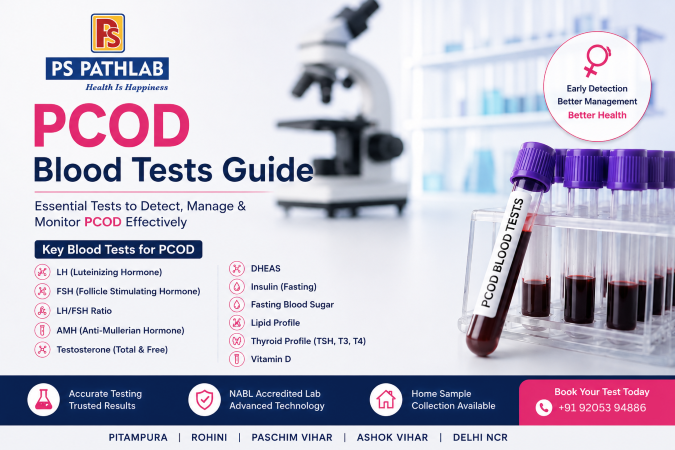
Blood Tests Recommended for PCOD
1. LH (Luteinizing Hormone)
LH regulates ovulation.
Normal Range
2–12 IU/L (varies by menstrual cycle phase)
High LH levels compared to FSH are commonly seen in women with PCOD.
2. FSH (Follicle Stimulating Hormone)
FSH stimulates egg development.
Normal Range
3–10 IU/L
Doctors compare LH and FSH levels to evaluate hormonal balance.
3. LH/FSH Ratio
A ratio greater than 2:1 may suggest PCOD, although it is not diagnostic on its own.
4. Total Testosterone
Women with PCOD often have elevated testosterone.
Normal Range
15–70 ng/dL
High levels may cause:
- Acne
- Facial hair
- Hair loss
- Irregular periods
5. DHEAS (Dehydroepiandrosterone Sulfate)
This hormone is produced by the adrenal glands.
High levels can indicate androgen excess associated with PCOD.
6. Prolactin Test
High prolactin levels can also cause irregular periods.
Normal Range
5–25 ng/mL
Testing helps rule out other hormonal disorders.
7. Thyroid Profile (TSH, T3 & T4)
Thyroid disorders often mimic PCOD symptoms.
Normal TSH
0.4–4.0 mIU/L
Checking thyroid function is an important part of PCOD evaluation.
8. Fasting Blood Sugar
Many women with PCOD have insulin resistance.
Normal Range
70–99 mg/dL
This test helps detect diabetes risk early.
9. HbA1c
Measures average blood sugar over the previous three months.
Normal Range
- Below 5.7% – Normal
- 5.7–6.4% – Prediabetes
- 6.5% or higher – Diabetes
10. Lipid Profile
Women with PCOD may have abnormal cholesterol levels.
The lipid profile includes:
- Total Cholesterol
- HDL Cholesterol
- LDL Cholesterol
- Triglycerides
11. Insulin Test
Doctors may recommend fasting insulin levels to assess insulin resistance.
High insulin can contribute to:
- Weight gain
- Hormonal imbalance
- Difficulty losing weight
12. AMH (Anti-Müllerian Hormone)
AMH reflects ovarian reserve.
Women with PCOD often have higher AMH levels than average.
Additional Tests Your Doctor May Recommend
Depending on symptoms, your doctor may also advise:
- CBC (Complete Blood Count)
- Vitamin D Test
- Vitamin B12 Test
- Liver Function Test (LFT)
- Kidney Function Test (KFT)
- Pelvic Ultrasound
Do You Need to Fast Before a PCOD Blood Test?
It depends on the test.
Fasting is required for:
- Fasting Blood Sugar
- Fasting Insulin
- Lipid Profile
Fasting is not usually required for:
- LH
- FSH
- Testosterone
- DHEAS
- Prolactin
- TSH
- AMH
Always follow your doctor's instructions before testing.
When Should You Get Tested?
Consult a healthcare provider if you experience:
- Irregular menstrual cycles
- Excessive facial hair
- Acne that does not improve
- Difficulty getting pregnant
- Rapid weight gain
- Hair thinning
- Family history of PCOD or diabetes
Early testing allows timely treatment and better long-term health outcomes.
Can Blood Tests Alone Diagnose PCOD?
No.
Doctors usually diagnose PCOD based on:
- Medical history
- Physical examination
- Blood tests
- Pelvic ultrasound
- Menstrual history
- Clinical symptoms
A combination of these findings provides the most accurate diagnosis.
Tips to Manage PCOD
Along with medical treatment:
- Maintain a healthy weight
- Exercise regularly
- Eat a balanced, low-glycemic diet
- Sleep 7–8 hours daily
- Reduce stress
- Avoid smoking and excessive alcohol
- Follow your doctor's treatment plan
Lifestyle changes can significantly improve hormone balance and overall health.
Frequently Asked Questions (FAQs)
Which blood test confirms PCOD?
There is no single confirmatory blood test. Doctors evaluate a combination of hormone tests such as LH, FSH, testosterone, DHEAS, prolactin, thyroid profile, and blood sugar tests along with clinical findings.
Is fasting necessary for a PCOD blood test?
Fasting is required only for specific tests such as fasting blood sugar, insulin, and lipid profile.
What is the best hormone test for PCOD?
LH, FSH, testosterone, DHEA-S, prolactin, and AMH are among the most commonly recommended hormone tests.
Can PCOD be detected in routine blood tests?
Routine blood tests like CBC cannot diagnose PCOD, but specialized hormone tests combined with ultrasound help establish the diagnosis.
Can PCOD be cured?
PCOD cannot always be permanently cured, but it can be effectively managed with lifestyle changes, medications, and regular monitoring.