
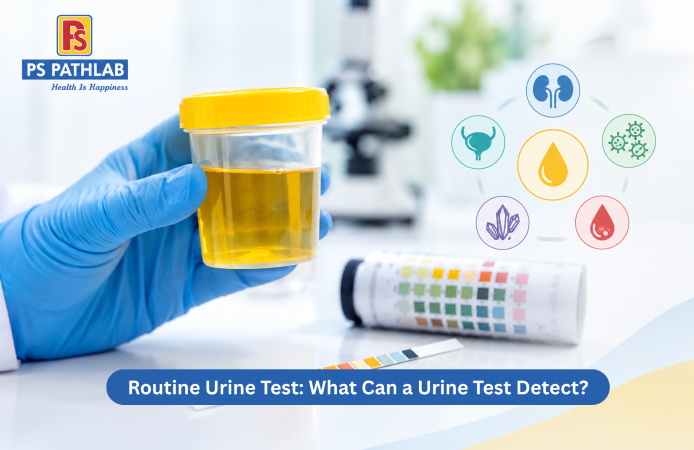
Routine Urine Test: What Can a Urine Test Detect?
A routine urine test is a simple and commonly performed diagnostic test that can provide valuable information about your overall health. It examines the physical, chemical, and microscopic characteristics of urine and may help doctors identify signs of urinary tract infections, kidney problems, diabetes, dehydration, and other health conditions.
At PS Path Lab, a routine urine examination can be an important part of preventive health checkups as well as the evaluation of symptoms such as burning during urination, frequent urination, abdominal discomfort, or changes in urine color.
What Is a Routine Urine Test?
A routine urine test, also called urine routine and microscopy (urine R/M), examines a urine sample for different physical, chemical, and microscopic parameters.
Depending on the test, a laboratory may check:
- Urine color and appearance
- pH
- Specific gravity
- Protein
- Glucose
- Ketones
- Bilirubin
- Urobilinogen
- Blood or hemoglobin
- Nitrite
- Leukocyte esterase
- Red blood cells (RBCs)
- White blood cells (WBCs)
- Epithelial cells
- Crystals
- Casts
- Bacteria and other microscopic findings
The results are interpreted together with symptoms and other clinical information.
What Can a Urine Test Detect?
A routine urine test can provide clues about several health conditions.
1. Urinary Tract Infection (UTI)
A urine test may show findings associated with a urinary tract infection, such as increased white blood cells, bacteria, nitrites, or leukocyte esterase.
Common UTI symptoms include:
- Burning or pain while urinating
- Frequent urge to urinate
- Lower abdominal discomfort
- Cloudy or unusual-smelling urine
- Sometimes fever or back pain
If a UTI is suspected, a doctor may recommend additional testing such as a urine culture.
2. Kidney Problems
Urine testing can provide useful information about kidney health. The presence of protein, blood, casts, or other abnormal findings may require further evaluation.
Persistent protein in urine, for example, can sometimes be associated with kidney disease. However, an abnormal urine result does not automatically mean that a person has kidney disease. Your doctor may recommend additional blood or urine tests.
3. Diabetes and High Blood Sugar
A urine test may detect glucose or ketones in urine.
Glucose in urine can sometimes occur when blood glucose levels are elevated, while ketones may appear when the body is using fat as an energy source.
For diabetes screening and diagnosis, doctors generally use blood glucose testing and/or HbA1c, rather than relying on a routine urine test alone.
4. Blood in Urine
The presence of blood or red blood cells in urine is known as hematuria.
Blood in urine can have several possible causes, including urinary infections, kidney stones, strenuous exercise, or other urinary tract conditions. If blood is detected, further evaluation may be needed depending on the patient's symptoms and medical history.
5. Dehydration
Urine concentration can provide clues about hydration status. Specific gravity is one of the parameters evaluated during urine examination.
Dark or concentrated urine can occur with dehydration, although urine color can also be affected by food, medicines, supplements, and other factors.
6. Liver or Biliary Conditions
Certain urine findings, including bilirubin and urobilinogen, can provide additional information that may be relevant when evaluating liver or biliary conditions.
Abnormal results usually need to be interpreted alongside symptoms and blood tests such as liver function tests.
7. Kidney Stones and Crystals
Microscopic examination may identify different types of urinary crystals. Some crystals can be associated with an increased tendency to form kidney stones.
However, finding crystals in urine does not necessarily mean that a person has kidney stones. Further assessment may be required based on symptoms and clinical findings.
What Is Checked in a Routine Urine Examination?
A routine urine test generally evaluates three broad areas:
Physical Examination
The laboratory may assess:
- Color
- Appearance
- Clarity
- Concentration
Chemical Examination
The sample may be checked for:
- Protein
- Glucose
- Ketones
- Blood
- Bilirubin
- Nitrite
- pH
- Specific gravity
- Urobilinogen
Microscopic Examination
Microscopy may identify:
- RBCs
- WBCs
- Epithelial cells
- Bacteria
- Crystals
- Casts
- Other microscopic elements
The exact parameters can vary depending on the laboratory and the test ordered.
Is Fasting Required for a Routine Urine Test?
Usually, fasting is not required for a routine urine test.
However, if your doctor has prescribed other blood tests along with the urine examination, fasting may be required for those tests. Follow the instructions provided by your doctor or laboratory.
How Should You Prepare for a Urine Test?
For a routine urine examination:
- Follow the laboratory's sample collection instructions.
- Use a clean, appropriate sample container.
- If instructed, collect a midstream urine sample.
- Avoid contaminating the sample.
- Provide the sample to the laboratory as instructed.
- Inform your healthcare provider about medicines or supplements you are taking if relevant.
Women who are menstruating should inform the laboratory because menstrual blood can potentially affect some urine test results.
When Should You Consider a Urine Test?
A doctor may recommend urine testing when you have symptoms such as:
- Burning while urinating
- Frequent urination
- Blood in urine
- Unusual urine color or appearance
- Lower abdominal or back discomfort
- Fever with urinary symptoms
- Swelling or other symptoms that may require kidney evaluation
Urine testing may also be included as part of certain routine or preventive health checkups.
Does an Abnormal Urine Test Mean I Have a Disease?
Not necessarily.
An abnormal urine result can have several possible explanations. Temporary changes may occur because of dehydration, exercise, diet, medicines, contamination of the sample, or other factors.
Your doctor interprets urine test results along with your symptoms, medical history, physical examination, and other laboratory investigations.
Do not diagnose yourself based on a single abnormal urine parameter.
Frequently Asked Questions
1. What can a routine urine test detect?
A routine urine test can provide clues about urinary tract infections, kidney-related abnormalities, glucose or ketones in urine, blood in urine, dehydration, and other conditions.
2. Can a urine test detect a UTI?
Yes. Certain urine findings, including white blood cells, nitrites, leukocyte esterase, and bacteria, may support suspicion of a UTI. A urine culture may be recommended when confirmation or antibiotic sensitivity testing is needed.
3. Can a urine test detect kidney problems?
A urine test can identify findings such as protein, blood, casts, or other abnormalities that may require further evaluation for kidney problems.
4. Can a urine test detect diabetes?
Urine may contain glucose or ketones when blood sugar or metabolism is abnormal, but blood glucose and HbA1c tests are commonly used for diabetes screening and diagnosis.
5. Is fasting required before a urine test?
Usually, no. A routine urine test generally does not require fasting unless it is being performed along with other tests that require fasting.
6. What does protein in urine mean?
Protein in urine can occur for temporary reasons or may be associated with kidney-related conditions. Persistent proteinuria should be evaluated by a healthcare professional.
7. What does blood in urine mean?
Blood in urine can have several causes, including infections, kidney stones, exercise, or other urinary tract conditions. Persistent or visible blood should be medically evaluated.
8. How long does a routine urine test take?
The time required can vary depending on the laboratory and testing method. Ask the laboratory about the expected report turnaround time when booking the test.
Routine Urine Test in Pitampura, Delhi
Looking for a routine urine test in Pitampura, Delhi?
PS Path Lab provides a range of diagnostic and pathology testing services, including routine urine examinations and other health investigations.
For test availability, sample collection, pricing, and report-related information, contact PS Path Lab or visit the laboratory.
PS Path Lab
Accurate Reports • Trusted Diagnostics
📍 198 Deepali Enclave, Pitampura, Basement, Delhi – 110034
🌐 Website: www.pspathlab.com