
What Happens to Your Blood Sample After Collection? A Complete Step-by-Step Guide
Introduction
Have you ever wondered what happens to your blood sample after it is collected for a blood test? Most people visit a diagnostic laboratory, get their blood sample collected, and wait for their reports. However, several important steps take place between blood collection and the delivery of the final test report.
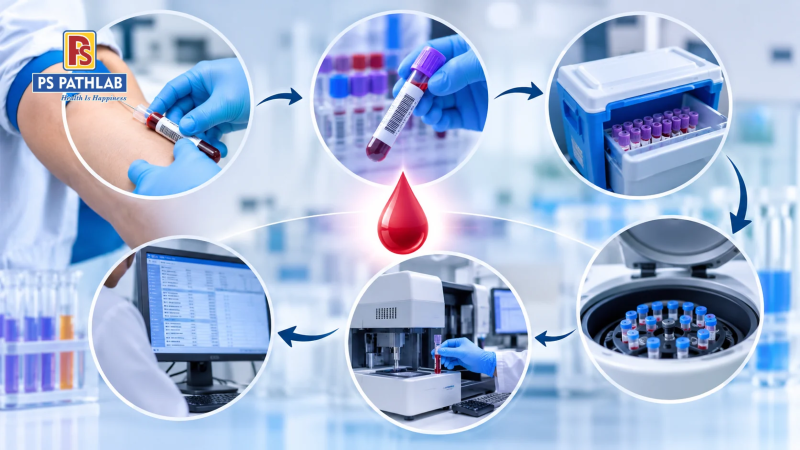
At PS PathLab, we believe that understanding the blood testing process helps people make informed healthcare decisions. Every blood sample goes through a series of procedures, including sample identification, transportation, processing, laboratory analysis, and quality checks.
In this blog, we will explain the complete journey of a blood sample, from collection to report generation.
1. Blood Sample Collection: The First Step
The process begins with blood sample collection by a trained healthcare professional or phlebotomist.
Depending on the prescribed blood tests, the required amount of blood is collected into specially designed collection tubes.
Different collection tubes may be used for different tests because they contain specific additives or anticoagulants.
During collection, proper hygiene, sterile equipment, and correct patient identification are essential for maintaining sample safety and quality.
2. Labelling and Identification of the Blood Sample
After collection, the blood sample is labelled with the necessary patient identification details.
This step is extremely important because correct identification helps prevent sample mix-ups.
Laboratories may use barcode labels or other identification systems to track samples throughout the testing process.
Important details generally include:
- Patient identification details.
- Sample collection date and time.
- Type of sample collected.
- Tests requested by the doctor.
3. Safe Transportation to the Laboratory
Once labelled, blood samples are transported to the appropriate laboratory processing area.
Proper transportation conditions are important because certain blood tests require specific temperature conditions and timely processing.
Laboratories follow appropriate sample-handling procedures to help maintain sample integrity during transportation.
For home blood collection services, maintaining proper handling conditions from collection to laboratory processing is equally important.
4. Blood Sample Processing and Centrifugation
After reaching the laboratory, the sample is checked and prepared for testing.
Some blood samples require processing using a machine called a centrifuge.
A centrifuge spins the blood sample at high speed to separate its components based on their density.
This process can separate:
- Serum: The liquid portion obtained after blood has clotted.
- Plasma: The liquid portion of anticoagulated blood.
- Blood cells: Red blood cells, white blood cells, and platelets.
Not every blood test requires centrifugation. The processing method depends on the specific test being performed.
5. Laboratory Testing and Analysis
This is one of the most important stages of the blood testing process.
The prepared sample is analyzed using appropriate laboratory equipment and testing methods.
Different blood tests examine different aspects of your health.
Some common examples include:
Blood Test: What It Helps Evaluate
CBC | Blood cells, hemoglobin, and related parameters
Lipid Profile | Cholesterol and triglyceride levels
LFT | Liver-related markers
KFT | Kidney-related markers
Thyroid Profile | Thyroid hormone levels
HbA1c | Average blood glucose over approximately 2–3 months
Vitamin D | Vitamin D status
Vitamin B12 | Vitamin B12 status
These results provide useful information that doctors can interpret alongside symptoms, medical history, and other clinical findings.
6. Quality Control and Result Verification
Before a blood test report is released, laboratories follow quality-control procedures to help ensure the reliability of test results.
These procedures may include:
- Running quality-control materials.
- Checking laboratory analyzer performance.
- Reviewing unusual or unexpected results.
- Repeating tests when technically necessary.
- Reviewing results according to laboratory protocols.
Quality control is an important part of laboratory operations because reliable reporting depends on appropriate sample handling, validated testing procedures, and equipment performance.
7. Report Generation and Delivery
After testing and necessary verification, the results are compiled into a laboratory report.
The report contains the measured parameters, corresponding values, and reference ranges where applicable.
Reports are then made available through the laboratory's designated delivery system.
At PS PathLab, patients can access their reports through our official website:
Website: https://www.pspathlab.com
Patients should share their reports with their doctor for proper medical interpretation and guidance.
How Long Does It Take to Process a Blood Sample?
The processing time depends on the type of blood test, laboratory workload, sample requirements, and testing method.
Some routine tests may be completed relatively quickly, while specialized tests can require additional processing time.
For an accurate report delivery estimate, contact your diagnostic laboratory before sample collection.
Why Is Proper Blood Sample Handling Important?
Proper sample handling plays an important role in obtaining dependable laboratory results.
Incorrect labelling, unsuitable transportation conditions, delayed processing, or sample contamination can affect sample quality and may lead to inaccurate or unusable results.
That is why every stage, from blood collection to final report generation, matters.
Choosing a reliable diagnostic laboratory that follows appropriate sample-handling and quality-control procedures can help support better diagnostic testing.
Why Choose PS PathLab for Blood Testing in Pitampura, Delhi?
When choosing a diagnostic laboratory, patients should consider sample-handling practices, qualified professionals, testing facilities, and convenient services.
PS PathLab provides diagnostic testing services with a focus on patient convenience and responsible sample handling.
Our services include:
- Blood and urine testing services.
- Preventive health checkup packages.
- Thyroid and diabetes testing.
- Liver and kidney function tests.
- Lipid profile and vitamin testing.
- Home blood sample collection.
- Online report access.
Whether you need routine blood testing or preventive health screening, PS PathLab aims to make diagnostic services convenient and accessible.
Visit PS PathLab.
Address: 198 Deepali Enclave, Pitampura, Basement, Delhi – 110034.
Contact: +91 96674 92046.
Website: https://www.pspathlab.com
PS PathLab – Health Is Happiness.
Frequently Asked Questions (FAQs)
1. What happens to your blood sample after collection?
After collection, the blood sample is labelled, transported to the laboratory, checked, processed, and analysed using suitable testing methods. The results are then reviewed and compiled into a report.
2. Where does my blood sample go after collection?
Your blood sample is transported to the designated diagnostic laboratory, where it undergoes identification, processing, and testing.
3. Why are blood samples collected in different colored tubes?
Different colored tubes contain different additives or anticoagulants required for specific laboratory tests.
4. What is centrifugation in blood testing?
Centrifugation is a process that separates blood components, such as serum or plasma, using a high-speed spinning machine.
5. How do laboratories ensure accurate blood test results?
Laboratories use appropriate testing methods, equipment checks, quality-control procedures, and result verification to support reliable testing.
6. Can a blood sample become unsuitable for testing?
Yes. Improper collection, contamination, hemolysis, incorrect storage, or delayed processing can make certain samples unsuitable for testing.
7. How long does a blood sample take to reach the laboratory?
The time depends on the collection location, transportation arrangements, and laboratory workflow. Appropriate transportation conditions must be maintained.
8. Are blood samples tested immediately after collection?
Not always. Some samples require preparation, clotting, centrifugation, or other processing before analysis.
9. Can I book home blood sample collection in Pitampura?
You can contact PS PathLab to inquire about home blood sample collection availability and booking details in Pitampura, Delhi.
10. Where can I get blood testing services in Pitampura, Delhi?
You can visit PS PathLab at 198 Deepali Enclave, Pitampura, Delhi, for information about available blood testing and diagnostic services.
Conclusion
Your blood sample goes through several important stages before your final report is generated. From careful collection and identification to laboratory analysis and quality control, every step contributes to the overall testing process.
Understanding these procedures helps patients appreciate the importance of proper sample handling and professional diagnostic services.
At PS PathLab, we believe that informed healthcare decisions begin with understanding your health.
PS PathLab – Health Is Happiness.