
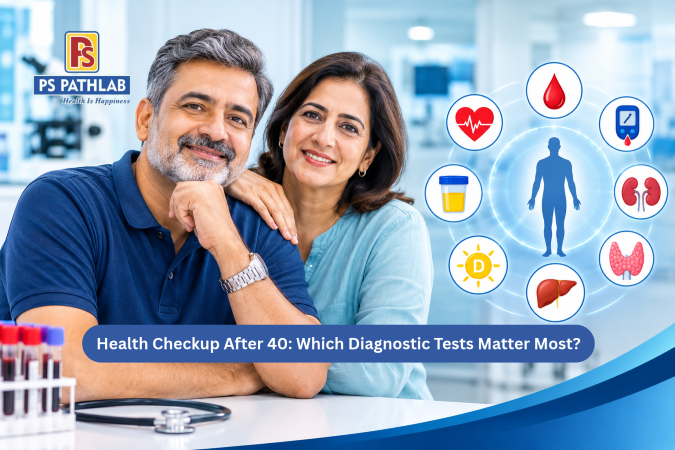
Health Checkup After 40: Which Diagnostic Tests Matter Most?
Your 40s are an important time to prioritize your health. As you grow older, the risk of developing conditions such as diabetes, high cholesterol, high blood pressure, thyroid disorders, and cardiovascular diseases may increase. Many of these conditions can develop without noticeable symptoms, making regular health checkups an important part of preventive healthcare.
A health checkup after 40 helps you understand your current health status, identify potential risk factors, and make informed decisions about your lifestyle and medical care.
At PS PathLab, Pitampura, Delhi, we believe that preventive healthcare begins with awareness, timely testing, and reliable diagnostic services.
In this guide, we will explore the important diagnostic tests that adults over 40 should discuss with their healthcare providers.
Why Are Regular Health Checkups Important After 40?
After the age of 40, changes in metabolism, hormonal activity, and cardiovascular health can influence your overall well-being.
Regular health screenings can help:
- Identify early signs of diabetes and blood sugar abnormalities.
- Monitor cholesterol levels and cardiovascular risk.
- Evaluate liver and kidney function.
- Detect thyroid-related abnormalities.
- Identify certain nutritional deficiencies.
- Monitor existing health conditions.
- Support informed preventive healthcare decisions.
Even if you feel healthy, regular health assessments can help identify potential health concerns before symptoms become noticeable.
10 Important Diagnostic Tests to Consider After 40
Here are some commonly recommended diagnostic tests that may be included in a preventive health assessment, depending on your medical history and risk factors.
1. Complete Blood Count (CBC) Test
A CBC test evaluates different components of your blood, including red blood cells, white blood cells, and platelets.
It can help identify:
- Anemia and certain blood disorders.
- Signs of infection.
- Abnormalities in blood cell counts.
- Conditions requiring further medical evaluation.
A CBC test is a useful part of routine health assessment.
2. Blood Sugar Test and HbA1c Test
The risk of developing type 2 diabetes can increase with age, particularly when combined with factors such as excess body weight, family history, and physical inactivity.
Important tests include:
- Fasting Blood Sugar (FBS)
- Postprandial Blood Sugar (PPBS), when indicated
- Random Blood Sugar (RBS), when appropriate
- HbA1c Test
The HbA1c test measures average blood glucose levels over approximately the previous 2–3 months.
These tests help identify diabetes and prediabetes and monitor glucose control.
3. Lipid Profile Test
Heart health becomes increasingly important after 40. A lipid profile measures different types of fats in your blood.
It generally includes:
- Total Cholesterol
- HDL Cholesterol
- LDL Cholesterol
- Triglycerides
Abnormal cholesterol levels can increase cardiovascular risk. Regular monitoring helps healthcare providers assess your heart health and recommend appropriate lifestyle or medical interventions.
4. Liver Function Test (LFT)
The liver plays an essential role in digestion, metabolism, and detoxification.
An LFT measures different enzymes and proteins that help evaluate liver health.
It may help identify abnormalities associated with:
- Fatty liver disease.
- Liver inflammation.
- Certain liver disorders.
- Effects of some medications.
Your doctor may recommend an LFT based on your medical history and risk factors.
5. Kidney Function Test (KFT)
Kidneys help filter waste products and maintain the body's fluid and electrolyte balance.
A kidney function test may include measurements such as
- Serum Creatinine
- Blood Urea
- Uric Acid
- Electrolytes, where indicated
Kidney function monitoring is particularly important for individuals with diabetes, high blood pressure, or a family history of kidney disease.
Urine albumin-to-creatinine ratio (UACR) may also be recommended for people at increased risk of kidney disease.
6. Thyroid Profile Test
Thyroid hormones influence metabolism, energy levels, and several important body functions.
A thyroid screening test commonly includes TSH, with additional thyroid hormone tests such as T3 and T4 when clinically appropriate.
Thyroid testing may be considered when experiencing:
- Unexplained weight changes.
- Fatigue and weakness.
- Changes in heart rate.
- Hair thinning.
- Unusual sensitivity to cold or heat.
Your doctor can determine whether thyroid testing is necessary based on your symptoms and medical history.
7. Vitamin D Test
Vitamin D supports bone health, calcium absorption, and normal muscle function.
Vitamin D deficiency can be associated with:
- Bone discomfort.
- Muscle weakness.
- Increased risk of bone-related problems.
A vitamin D (25-OH) test may be recommended for individuals with symptoms or specific risk factors.
8. Vitamin B12 Test
Vitamin B12 is essential for healthy nerve function and red blood cell production.
Low Vitamin B12 levels may contribute to:
- Fatigue.
- Weakness.
- Tingling or numbness.
- Certain types of anemia.
Adults with dietary restrictions, absorption problems, or relevant symptoms may benefit from vitamin B12 testing.
9. Urine Routine and Microscopy Test
A urine routine test examines the physical, chemical, and microscopic characteristics of urine.
It can help identify:
- Signs of urinary tract infection.
- Blood in urine.
- Protein in urine.
- Certain abnormalities that may require further investigation.
It is a commonly used diagnostic test when evaluating urinary and kidney-related concerns.
10. Blood Pressure and Cardiovascular Screening
Blood pressure screening is an important part of preventive healthcare after 40.
High blood pressure often develops without obvious symptoms and can increase the risk of heart disease, stroke, and kidney problems.
Depending on your personal risk factors, your doctor may also recommend an ECG or other cardiovascular assessments.
Important Health Screenings for Men and Women After 40
Men and women may have different preventive screening requirements.
For Men:
- Blood pressure screening.
- Diabetes screening.
- Lipid profile.
- Colorectal cancer screening, according to age and risk.
- Prostate health assessment after discussing individual risks and benefits with a doctor.
For Women:
- Blood pressure screening.
- Diabetes screening.
- Lipid profile.
- Breast cancer screening, according to age and guidelines.
- Cervical cancer screening.
- Bone health assessment when indicated.
These screenings are different from routine blood tests and should be planned according to individual health needs and medical recommendations.
How Often Should You Get a Health Checkup After 40?
There is no single testing schedule suitable for everyone. The frequency depends on your health condition, family history, lifestyle, and previous test results.
Health Assessment Recommended Frequency
Blood pressure | Regularly, as advised
Blood sugar / HbA1c | According to diabetes risk and previous results
Lipid Profile | Based on cardiovascular risk
CBC | When clinically indicated
LFT and KFT | Based on medical history and risk
Thyroid Profile | When symptoms or risk factors warrant testing
Vitamin D and B12 | When clinically indicated
Cancer screenings | According to age-specific guidelines
Always consult a qualified healthcare professional to determine which tests you need and how frequently you should repeat them.
Where Can You Get a Health Checkup in Pitampura, Delhi?
Choosing a reliable diagnostic laboratory is an important part of preventive healthcare.
PS PathLab, located in Pitampura, Delhi, provides diagnostic testing services to help individuals monitor their health and make informed healthcare decisions.
Our diagnostic services include:
- Complete Blood Count (CBC).
- Blood Sugar and HbA1c Testing.
- Lipid Profile.
- Liver Function Test (LFT).
- Kidney Function Test (KFT).
- Thyroid Profile.
- Vitamin D and Vitamin B12 Testing.
- Urine Routine and Microscopy.
We also offer home sample collection for added convenience.
PS PathLab – Health Is Happiness
Visit Us: 198 Deepali Enclave, Pitampura, Basement, Delhi – 110034.
Call: +91 96674 92046
Website: https://www.pspathlab.com/
Frequently Asked Questions (FAQs)
1. Which health tests should I get after 40?
Common tests to discuss with your doctor include CBC, blood sugar, HbA1c, lipid profile, LFT, KFT, and thyroid testing. Additional screenings depend on your health history and risk factors.
2. Is a full body checkup necessary after 40?
A preventive health assessment can help monitor important health indicators and identify potential risk factors. The tests included should be selected according to individual medical needs.
3. Which blood tests detect diabetes after 40?
Fasting blood sugar and HbA1c are commonly used to screen for diabetes and prediabetes.
4. Why is a lipid profile important after 40?
A lipid profile measures cholesterol and triglycerides, helping healthcare providers assess cardiovascular risk.
5. Should men and women have different health checkups after 40?
Yes. Both need general preventive screenings, but women may require breast and cervical cancer screening, while men may need individualized prostate health discussions.
6. How often should I get a full body checkup after 40?
The frequency depends on your medical history, health risks, and previous results. Your doctor can recommend an appropriate schedule.
7. Can regular blood tests detect health problems early?
Blood tests can help identify certain abnormalities before symptoms appear, although no single blood test can detect every disease.
8. Is HbA1c better than a fasting blood sugar test?
Both tests provide useful information. HbA1c reflects average blood glucose over approximately 2–3 months, while fasting blood sugar measures glucose at a particular time.
9. Can I get blood tests at home in Pitampura?
Yes. PS PathLab offers home sample collection services in Pitampura and selected service areas. Contact the laboratory to confirm availability.
10. Where can I get a preventive health checkup in Pitampura?
You can contact PS PathLab, located at 198 Deepali Enclave, Pitampura, Delhi – 110034, for information about available diagnostic tests and health checkup services.
Conclusion
Turning 40 is an excellent opportunity to make preventive healthcare a priority. Monitoring blood sugar, cholesterol, liver function, kidney function and other important health indicators can help you stay informed about your health.
Rather than waiting for symptoms to appear, discuss appropriate preventive screenings with your healthcare provider.
Take the first step towards better health with PS PathLab.
PS PathLab – Accurate Reports • Trusted Diagnostics.
Book Your Diagnostic Test Today!
Website: https://www.pspathlab.com/
Contact: +91 96674 92046