
Hair Fall and Nutritional Deficiencies: Which Blood Tests Can Help?
Hair fall is a common concern among men and women. While losing around 50–100 hair strands daily can be normal, excessive hair shedding, thinning hair, or a receding hairline may indicate an underlying health or nutritional issue.
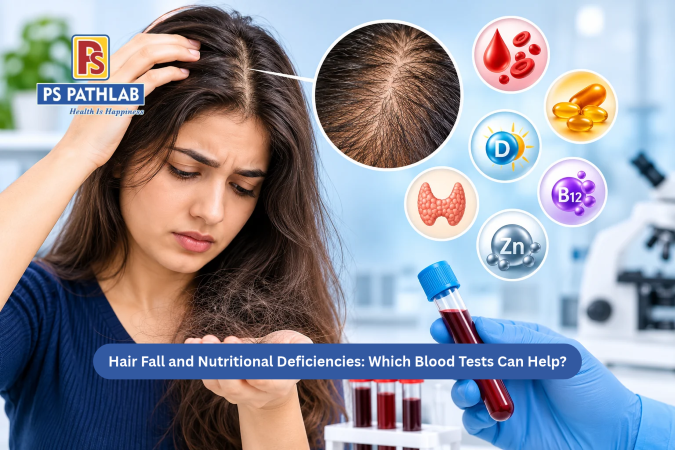
One often-overlooked cause of hair fall is nutritional deficiency. Low iron levels, vitamin B12 deficiency, vitamin D deficiency, and thyroid disorders can sometimes contribute to excessive hair shedding.
But how can you identify the actual cause?
Certain blood tests can help detect nutritional deficiencies and other health conditions that may be associated with hair loss. In this blog, PS PathLab explains the important blood tests that can help investigate hair fall and when you should consider getting tested.
1. Can Nutritional Deficiencies Cause Hair Fall?
Yes. Your hair follicles require essential nutrients to maintain healthy growth. When the body does not receive enough vitamins and minerals, normal hair growth cycles may be affected.
Some common nutritional deficiencies associated with hair problems include
- Iron Deficiency: Low iron stores may contribute to excessive hair shedding.
- Vitamin B12 Deficiency: Vitamin B12 supports red blood cell formation and normal cell function.
- Vitamin D Deficiency: Vitamin D plays a role in hair follicle function.
- Zinc Deficiency: Zinc is important for tissue growth and repair, including hair follicles.
- Protein Deficiency: Inadequate protein intake may affect normal hair growth.
Identifying these deficiencies can help healthcare professionals understand whether nutritional factors are contributing to hair loss.
2. Which Blood Tests Can Help Identify the Cause of Hair Fall?
If you are experiencing unexplained or excessive hair loss, your healthcare professional may recommend certain blood tests depending on your symptoms and medical history.
A. CBC (Complete Blood Count) Test
A CBC test measures different components of your blood, including red blood cells, white blood cells, and hemoglobin.
Why is it important?
- Helps identify anemia.
- Provides information about hemoglobin levels.
- Helps assess whether blood-related abnormalities may be contributing to hair-related symptoms.
B. Ferritin Test
Ferritin is a protein that stores iron in the body. Low ferritin levels may indicate reduced iron stores, even before significant anemia develops.
Why is it important?
- Helps assess the body's stored iron.
- Helps investigate possible iron deficiency.
- Can be useful when evaluating unexplained hair shedding.
C. Iron Profile Test
Iron is essential for hemoglobin production and oxygen transportation throughout the body.
An iron profile may include serum iron, TIBC, and transferrin saturation.
Why is it important?
- Helps evaluate iron status.
- Identifies possible iron deficiency.
- Helps investigate nutritional factors associated with hair loss.
D. Vitamin B12 Test
Vitamin B12 supports healthy red blood cell production and normal nerve function.
A deficiency may contribute to anemia and other health problems.
Why is it important?
- Helps identify vitamin B12 deficiency.
- Evaluates a possible nutritional cause of related health symptoms.
- Supports a broader investigation of unexplained hair problems.
E. Vitamin D (25-OH) Test
Vitamin D plays an important role in bone health, immunity, and several cellular processes, including hair follicle function.
Why is it important?
- Helps identify Vitamin D deficiency.
- Provides information about vitamin D levels.
- May help investigate nutritional factors associated with hair loss.
F. Thyroid Profile Test (TSH)
The thyroid gland regulates metabolism and influences several body functions, including the hair growth cycle.
Both hypothyroidism and hyperthyroidism may be associated with hair thinning or excessive hair shedding.
Why is it important?
- Helps assess thyroid function.
- Helps identify possible thyroid-related abnormalities.
- Supports the investigation of unexplained hair thinning.
G. Zinc Test
Zinc is an essential mineral involved in cell growth, tissue repair, and normal immune function.
Low zinc levels may contribute to hair-related problems in some individuals.
Why is it important?
- Helps assess zinc levels.
- Identifies possible zinc deficiency.
- May help investigate nutritional causes of hair problems when clinically indicated.
3. Common Signs That May Indicate Nutritional Deficiencies
Hair fall is not always the only symptom of nutritional deficiencies. Other signs may include:
- Excessive hair shedding.
- Dry or brittle hair.
- Persistent tiredness or fatigue.
- Pale skin.
- Frequent weakness.
- Brittle nails.
- Difficulty concentrating.
- Changes in skin condition.
These symptoms can have several possible causes. Blood testing and professional medical evaluation can help identify the underlying issue.
4. When Should You Consider Blood Tests for Hair Fall?
You may consider consulting a healthcare professional if you experience:
- Sudden or unexplained hair shedding.
- Continuous hair thinning.
- Hair fall along with fatigue or weakness.
- Hair loss after illness or significant stress.
- Hair-related changes along with symptoms of thyroid problems.
- Hair shedding associated with dietary restrictions or possible nutritional deficiencies.
A doctor may recommend specific blood tests based on your health condition. Not everyone needs every test listed above.
5. Can Blood Tests Help Improve Hair Health?
Blood tests do not directly treat hair loss, but they can help identify certain underlying health conditions and nutritional deficiencies.
For example:
- Low iron stores may require medical evaluation and appropriate iron treatment.
- Vitamin B12 deficiency may require dietary changes or supplementation.
- Vitamin D deficiency may require appropriate supplementation.
- Thyroid abnormalities may require medical treatment.
- Zinc deficiency may require nutritional correction.
Treatment should always depend on the test results and advice of a qualified healthcare professional. Avoid taking high-dose vitamin or mineral supplements without medical guidance.
6. Where Can You Get Hair Fall-Related Blood Tests in Pitampura, Delhi?
If you are experiencing unexplained hair fall and want to investigate possible nutritional deficiencies, choosing a reliable diagnostic laboratory is an important step.
PS PathLab provides diagnostic blood testing services in Pitampura, Delhi, to help individuals monitor their health and understand important health parameters.
You can consult your healthcare professional about tests such as
- CBC Test
- Ferritin Test
- Iron Profile Test
- Vitamin B12 Test
- Vitamin D Test
- Thyroid Profile Test
- Zinc Test
Why Choose PS PathLab?
- NABL-certified diagnostic services.
- Accurate and reliable testing processes.
- Professional sample collection.
- Convenient Free Home Collection.
- Multiple diagnostic testing options.
Visit PS PathLab:
Address: 198 Deepali Enclave, Pitampura, Basement, Delhi – 110034.
Phone: +91-9667492046
Website: https://www.pspathlab.com
Conclusion
Hair fall can be influenced by several factors, including nutritional deficiencies, hormonal changes, thyroid disorders, stress, genetics, and scalp conditions.
Blood tests such as CBC, ferritin, iron profile, vitamin B12, vitamin D, and TSH can help investigate some of the possible underlying causes.
If you are experiencing persistent or excessive hair fall, consult a healthcare professional to determine which tests are appropriate for you.
PS PathLab – Accurate Reports • Trusted Diagnostics.