
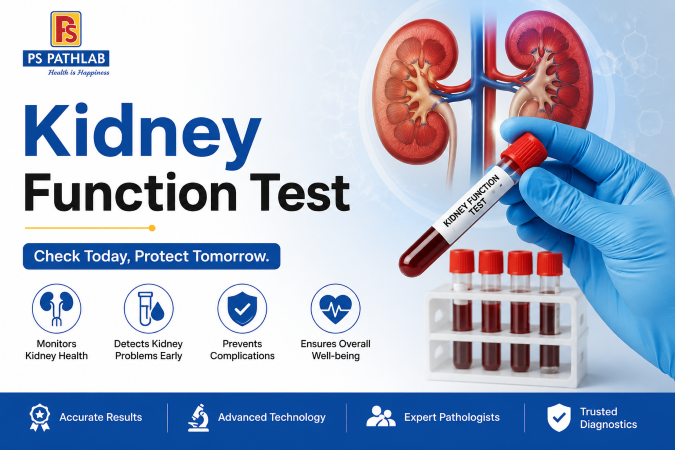
Your kidneys work silently every day to filter waste, balance fluids, regulate blood pressure, and maintain healthy electrolyte levels. Unfortunately, kidney disease often develops without noticeable symptoms until significant damage has occurred. That's why a Kidney Function Test (KFT) is one of the most important blood tests for detecting kidney problems early.
At PS Path Lab, we provide accurate, affordable, and reliable kidney function tests in Delhi, including Pitampura, Rohini, and North Delhi, with home sample collection available.
What is a Kidney Function Test (KFT)?
A Kidney Function Test (KFT), also called a Renal Function Test (RFT) or Kidney Blood Test, is a group of blood and urine tests that evaluate how efficiently your kidneys are filtering waste products from your blood.
The test helps doctors detect:
- Early kidney disease
- Kidney infections
- Chronic Kidney Disease (CKD)
- Kidney damage due to diabetes
- High blood pressure-related kidney problems
- Dehydration
- Medication-related kidney damage
Why is a kidney function test done?
Doctors recommend a KFT test to:
- Check overall kidney health
- Diagnose kidney disease
- Monitor chronic kidney disease
- Monitor diabetes patients
- Monitor hypertension patients
- Before major surgery
- During pregnancy (if advised)
- While taking medicines affecting kidneys
What Does a Kidney Function Test Include?
A complete kidney function test usually includes:
TestPurposeSerum Creatinine | Measures kidney filtration efficiency
Blood Urea | Indicates waste removal capability
Blood Urea Nitrogen (BUN) | Evaluates kidney function
Uric Acid | Detects kidney disorders and gout
Sodium | Electrolyte balance
Potassium | Heart and kidney health
Chloride | Fluid balance
Calcium | Bone and kidney metabolism
Phosphorus | Kidney function indicator
Estimated GFR (eGFR) | Measures kidney filtration rate
Symptoms That Indicate You Need a Kidney Function Test
Many kidney diseases remain silent in the early stages. You should consider getting a kidney health blood test if you experience:
- Swelling in feet or ankles
- Puffy eyes
- Frequent urination
- Reduced urine output
- Blood in urine
- Foamy urine
- Persistent fatigue
- Loss of appetite
- Muscle cramps
- Nausea
- High blood pressure
- Difficulty concentrating
- Back pain near the kidneys
Who Should Get a Kidney Function Test Regularly?
A kidney screening test is recommended for:
- People with diabetes
- High-blood-pressure patients
- Individuals above 40 years
- People with obesity
- Family history of kidney disease
- Heart disease patients
- Smokers
- Patients taking long-term painkillers
- Individuals with recurrent urinary infections
Kidney Function Test Normal Range
Serum Creatinine Normal Range
Category: Normal Range Adult Male | 0.7–1.3 mg/dL
Adult Female | 0.6–1.1 mg/dL
(Ranges may vary slightly depending on the laboratory.)
Blood Urea Normal Range
Test Normal Range: Blood Urea | 15–40 mg/dL
eGFR Normal Range
- Above 90 mL/min/1.73 m² → Normal
- 60–89 → Mild reduction
- Below 60 → Possible kidney disease
- Below 15 → Kidney failure
What Happens if Creatinine Levels Are High?
High creatinine may indicate:
- Kidney disease
- Dehydration
- Kidney infection
- Urinary blockage
- High blood pressure
- Diabetes-related kidney damage
- Certain medications
Always consult your doctor for proper interpretation.
Can High Blood Pressure Affect Kidney Function?
Yes.
Uncontrolled hypertension damages the tiny blood vessels in the kidneys, reducing their ability to filter blood effectively. Regular kidney function tests help monitor kidney health in patients with high blood pressure.
Can Diabetes Damage the Kidneys?
Absolutely.
Diabetes is one of the leading causes of chronic kidney disease.
Diabetic patients should undergo a kidney blood test every 6–12 months, depending on their doctor's advice.
Is Fasting Required for a Kidney Function Test?
Generally, fasting is not required for a kidney function test.
However, if your doctor has advised additional blood tests, such as
- Blood Sugar
- Lipid Profile
- HbA1c
You may be asked to fast for 8–12 hours.
Always follow your doctor's instructions.
How to Prepare for a Kidney Function Test
Before the test:
- Drink adequate water unless instructed otherwise.
- Inform your doctor about medications or supplements.
- Avoid strenuous exercise before testing.
- Follow fasting instructions if additional tests are included.
How Long Does a KFT Report Take?
At PS Path Lab, most kidney function test reports are available on the same day or within 24 hours, depending on the test profile and processing schedule.
Can a Kidney Function Test Detect Kidney Disease Early?
Yes.
A KFT can detect abnormalities before symptoms become severe, allowing early diagnosis and timely treatment to help prevent permanent kidney damage.
Importance of Regular Kidney Screening
Regular screening is especially important if you have:
- Diabetes
- High Blood Pressure
- Heart Disease
- Obesity
- Family history of kidney disease
Early diagnosis can help prevent complications and preserve kidney function.
Frequently Asked Questions (FAQs)
1. What is a Kidney Function Test (KFT)?
A kidney function test is a blood test that evaluates how well your kidneys remove waste products from the blood.
2. Why is a kidney function test done?
It helps diagnose kidney disease, monitor existing kidney problems, and assess kidney health in high-risk individuals.
3. What symptoms indicate you need a KFT?
Swelling, fatigue, frequent urination, blood in urine, high blood pressure, muscle cramps, and unexplained weakness.
4. What is the normal range of creatinine?
Typically:
- Men: 0.7–1.3 mg/dL
- Women: 0.6–1.1 mg/dL
5. What is the normal range of blood urea?
Usually between 15 and 40 mg/dL, though reference ranges may vary by laboratory.
6. Is fasting required for a kidney function test?
Not usually, unless other fasting blood tests are being performed at the same time.
7. How long does a KFT report take?
Most reports are available the same day or within 24 hours.
8. Can a KFT detect kidney disease early?
Yes. It is one of the best tests for early detection of kidney problems.
9. How often should diabetic patients get a KFT?
Generally every 6–12 months, or more frequently if recommended by their doctor.
10. Can high blood pressure affect kidney function?
Yes. Long-term uncontrolled high blood pressure can damage the kidneys.
11. What foods should I avoid before a kidney function test?
Unless instructed otherwise, no special dietary restrictions are needed. If fasting is required for other tests, follow your doctor's advice.
12. Is a kidney function test painful?
No. It involves a simple blood sample collection with minimal discomfort.
13. What is included in a KFT test?
Typically, serum creatinine, blood urea, BUN, electrolytes, uric acid, calcium, phosphorus, and eGFR.
14. What happens if my creatinine level is high?
High creatinine may indicate reduced kidney function, dehydration, or other medical conditions and should be evaluated by a healthcare professional.
15. Where can I get a kidney function test in Delhi?
PS Path Lab offers kidney function tests in Delhi, including Pitampura, Rohini, and North Delhi, with home sample collection for your convenience.