
Why Can Blood Test Results Differ Between Two Laboratories?
Blood tests are an important part of understanding your health. They help doctors evaluate blood sugar levels, thyroid function, cholesterol, liver health, kidney function, and many other health indicators. However, sometimes patients notice that the same blood test shows slightly different results at two laboratories.
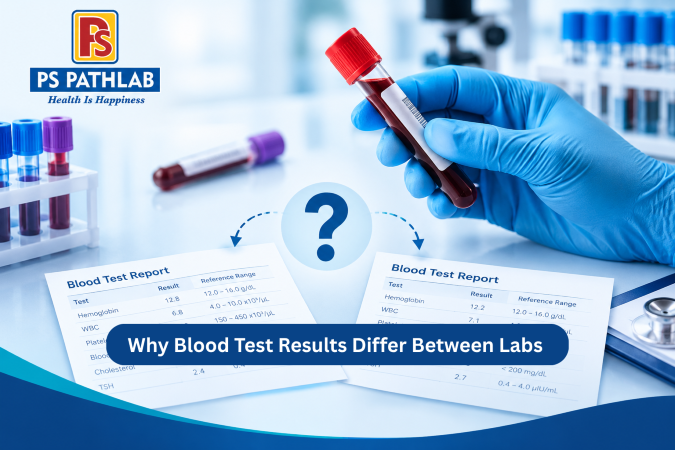
Why can blood test results differ between two laboratories? Differences may occur because of laboratory testing methods, equipment, sample handling, biological variation, and reference ranges. A difference does not automatically mean that one report is incorrect.
At PS PathLab, Pitampura, Delhi, we believe that understanding your blood test report helps you make more informed decisions about your health.
1. Differences in Laboratory Testing Methods
Laboratories may use different testing methods, reagents, and analytical techniques to measure the same health parameter. Although these methods are designed to provide reliable results, small variations can occur.
For example, different methods used to measure thyroid hormones, blood glucose, or cholesterol may produce slightly different values.
This is one reason why doctors may recommend comparing reports with the testing method and clinical context in mind.
2. Differences in Laboratory Equipment
Diagnostic laboratories use automated analyzers and other instruments to examine blood samples. Different instruments may have different measurement characteristics and levels of analytical variation.
Laboratories use calibration, quality-control procedures, and equipment maintenance to help ensure reliable results.
When comparing two reports, it is useful to check whether the same test method and units were used.
3. Sample Collection and Handling
The way a blood sample is collected, stored, and transported can affect certain test results.
Factors that may influence results include:
- Incorrect sample collection or tube selection.
- Delays in processing the sample.
- Inappropriate storage or transportation conditions.
- Haemolysis, which occurs when red blood cells break down in a sample.
- Differences in fasting status or the timing of sample collection.
Following the laboratory's preparation instructions and ensuring proper sample handling can help reduce avoidable variation.
4. Biological Variation in the Human Body
Your body is not completely static. Some blood measurements naturally change over time, even when you are healthy.
For example, blood glucose levels can change after meals, while certain hormones vary throughout the day. Hydration, physical activity, medications, and recent illness may also influence some test results.
Therefore, two samples collected at different times may show different values even when tested by the same laboratory.
5. Different Reference Ranges
One common reason two blood reports appear different is that laboratories may use different reference ranges.
A reference range represents values expected in a defined reference population under specified conditions. It can vary according to the test method, laboratory, age, sex, and other relevant factors.
For example, a result may be flagged as high by one laboratory but fall within another laboratory's reference range.
Important: A reference range is not the same as a diagnostic cutoff. Your doctor should interpret your results using the appropriate clinical guidelines and your individual health information.
6. Can Two Laboratories Give Different Results for the Same Blood Test?
Yes. Two laboratories can report slightly different values for the same test because of analytical variation, testing methods, sample handling, and natural biological changes.
However, the size and significance of the difference matter. A small variation may be expected, whereas a substantial or unexpected change may require further evaluation.
If you are comparing reports, check:
- Whether the same test was performed.
- Whether the units of measurement are identical.
- Whether the samples were collected under similar conditions.
- Whether the reference ranges are different.
- Whether the difference is clinically significant.
Do not assume that a report is inaccurate simply because its value differs from another report.
7. Should You Repeat a Blood Test if Two Reports Are Different?
Not every difference requires a repeat test. Your doctor may recommend repeating a test if the result is unexpected, inconsistent with your symptoms, or likely to affect treatment decisions.
When appropriate, repeating the test at the same laboratory using similar collection conditions may make comparisons easier. However, your doctor may recommend a different method or laboratory in certain situations.
Avoid changing medicines or starting treatment based only on differences between reports without medical advice.
8. How Can You Choose a Reliable Diagnostic Laboratory?
When selecting a laboratory, consider more than just the price of a test.
Look for:
- Appropriate laboratory accreditation and quality-management practices.
- Trained staff and proper sample collection procedures.
- Suitable equipment, calibration, and internal quality control.
- Clear reports with units and reference ranges.
- Proper sample handling and timely reporting.
- Professional support for questions about test preparation and reports.
Accreditation, where applicable, should be verified for the specific laboratory and the relevant tests within its accredited scope.
9. Blood Testing Services at PS PathLab, Pitampura, Delhi
PS PathLab provides diagnostic testing services for individuals seeking convenient access to routine and preventive health investigations in Pitampura, Delhi.
Depending on your doctor's recommendations, testing may include:
- Complete Blood Count (CBC).
- Blood glucose and HbA1c tests.
- Thyroid profile.
- Liver Function Test (LFT).
- Kidney Function Test (KFT).
- Lipid profile.
- Urine routine and microscopy.
- Preventive health checkup packages.
Patients can contact PS PathLab to inquire about test availability, preparation requirements, report collection, and home sample collection.
PS PathLab — Health Is Happiness
Website: https://www.pspathlab.com/
Location: 198 Deepali Enclave, Pitampura, Basement, Delhi – 110034.
Contact: +91-9667492046.
Frequently Asked Questions (FAQs)
Why can blood test results differ between two laboratories?
Results may differ because of testing methods, equipment, sample handling, biological variation, and reference ranges.
Can two labs give different results for the same blood test?
Yes. Small differences can occur between laboratories. A healthcare professional can help determine whether the difference is expected or clinically important.
Why are normal ranges different between laboratories?
Reference ranges may vary because of the testing method, laboratory procedures, and the population used to establish the range.
Should I trust the first blood test report or the second?
Neither report should automatically be considered more accurate. Your doctor can review both reports, the testing conditions, and your medical history to determine the appropriate next step.
Can fasting affect blood test results?
Yes. Fasting can affect certain measurements, particularly tests for which fasting is specifically recommended. Follow the instructions provided by your healthcare professional or laboratory.
Where can I get blood tests in Pitampura, Delhi?
You can contact PS PathLab in Pitampura, Delhi, to inquire about available blood tests, preventive health packages, and home sample collection services.
Conclusion
Differences between blood test reports can occur for several reasons, including testing methods, sample handling, biological variation, and reference ranges. Understanding these factors can help prevent unnecessary confusion and support better discussions with your doctor.
For blood testing and diagnostic service inquiries in Pitampura, Delhi, contact PS PathLab or visit https://www.pspathlab.com/.
Medical disclaimer: This article is for general educational purposes only and does not replace professional medical advice, diagnosis, or treatment. Always discuss unexpected or significantly different results with a qualified healthcare professional.