
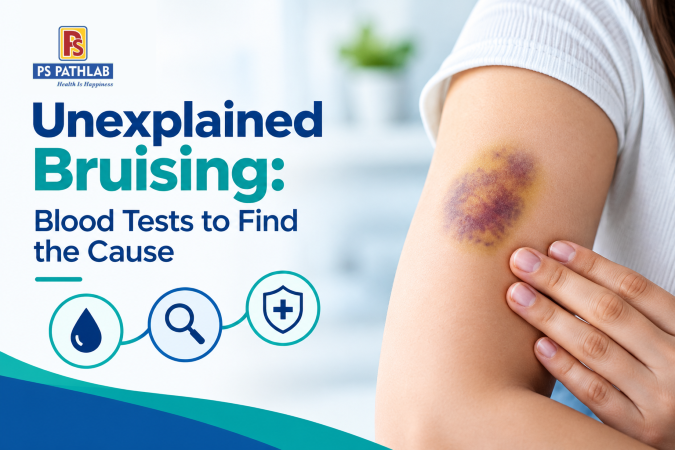
Unexplained Bruising: What Blood Tests May Help Find the Cause?
Have you noticed bruises on your arms, legs, or other parts of your body without remembering an injury? Occasional bruising is common, but frequent or unexplained bruising may sometimes indicate an underlying health condition that needs medical attention.
Bruises develop when small blood vessels beneath the skin break and leak blood into surrounding tissues. Although minor injuries are the most common cause, frequent bruising can also be associated with low platelet counts, blood clotting problems, certain medications, nutritional deficiencies, or liver conditions.
Understanding the possible causes and knowing which blood tests may help can be an important step toward identifying the problem.
At PS PathLab, we believe that informed health decisions begin with reliable diagnostic testing and appropriate medical guidance.
What Is Unexplained Bruising?
Unexplained bruising refers to bruises that appear without an obvious injury or after very minor contact. They may look blue, purple, red, or dark brown, depending on the stage of healing and skin tone.
Some people may notice bruises appearing frequently, unusually large bruises, or bruises in areas that are not typically exposed to injury.
While these symptoms do not necessarily indicate a serious condition, persistent or unusual bruising should not be ignored.
What Causes Bruising Without an Injury?
Several factors can contribute to unexplained or frequent bruising.
1. Low Platelet Count
Platelets are blood components that help stop bleeding by forming clots. When the platelet count is low, the body may have difficulty controlling bleeding, potentially resulting in easy bruising or small red and purple spots on the skin.
A Complete Blood Count (CBC) with platelet count can help identify a low platelet count.
2. Blood Clotting Problems
Blood clotting involves several proteins that work together to stop bleeding. Problems with these clotting factors may lead to easy bruising or prolonged bleeding after an injury.
Depending on the symptoms and medical history, a doctor may recommend PT/INR or aPTT tests to assess aspects of the clotting process.
3. Liver Conditions
The liver produces many proteins involved in blood clotting. Certain liver conditions can affect the body's ability to form clots properly, potentially contributing to unexplained bruising.
A doctor may recommend liver function tests and, when appropriate, additional clotting investigations.
4. Vitamin Deficiencies
Vitamin deficiencies can sometimes contribute to easy bruising. For example, vitamin C is important for healthy blood vessels and connective tissue, while vitamin K plays a role in normal blood clotting.
A doctor may recommend specific nutritional assessments when symptoms, dietary history, or other findings suggest a deficiency.
5. Medicines and Supplements
Some medicines, including anticoagulants and antiplatelet drugs, can increase bruising. Certain other medicines and supplements may also contribute.
Do not stop prescribed medicines without consulting your doctor.
Which Blood Tests May Help Find the Cause of Unexplained Bruising?
There is no single blood test that identifies every possible cause of bruising. A doctor may recommend one or more investigations based on your symptoms, examination, medical history, and medication use.
1. Complete Blood Count (CBC)
A CBC measures different blood cell components, including red blood cells, white blood cells, and platelets.
Why it may help: It can identify a low platelet count and other blood count abnormalities that may require further evaluation.
2. Platelet Count Test
Platelets help the blood clot and control bleeding.
Why it may help: A platelet count test helps determine whether the number of platelets is below or above the expected range. An abnormal result may require further investigation.
3. PT/INR Test
The Prothrombin Time (PT) test measures how long blood takes to clot through a particular clotting pathway. INR is a standardized way of reporting PT results.
Why it may help: It can assist in evaluating certain clotting problems and monitoring some anticoagulant treatments.
4. aPTT Test
The Activated Partial Thromboplastin Time (aPTT) test assesses another part of the blood clotting process.
Why it may help: It can help investigate selected clotting factor abnormalities and other clotting-related conditions.
5. Liver Function Test (LFT)
Liver function tests measure substances such as liver enzymes, bilirubin, and proteins in the blood.
Why it may help: These results can provide information about liver health. Additional testing may be needed to determine whether a liver condition is affecting blood clotting.
6. Vitamin Tests, When Indicated
Depending on the clinical findings, a doctor may recommend selected vitamin or nutritional tests.
Why they may help: These investigations can assess suspected deficiencies that may contribute to bruising or bleeding.
Remember that normal blood test results do not rule out every bleeding or clotting disorder. Some conditions require specialized testing and assessment by a doctor.
What Is the Normal Platelet Count?
A commonly used reference range for platelet counts in adults is approximately 150,000–450,000 platelets per microliter of blood (150–450 × 10⁹/L).
Reference ranges can vary slightly between laboratories. An abnormal platelet count does not automatically establish a diagnosis, and the result should be interpreted alongside symptoms and other findings.
When Should You Seek Medical Attention?
Consult a healthcare professional if you experience:
- Frequent bruises without an obvious cause.
- Large or unusually painful bruises.
- Small red or purple spots appearing on the skin.
- Repeated nosebleeds or bleeding gums.
- Bleeding that takes longer than expected to stop.
- Unexplained bruising along with persistent fatigue, fever, or other new symptoms.
Seek urgent medical care for heavy or uncontrolled bleeding, blood in vomit or stool, severe headache with unusual bruising, or other severe or rapidly worsening symptoms.
How Can PS PathLab Help?
PS PathLab provides diagnostic testing services to support informed healthcare decisions. If you are experiencing unexplained bruising, consult your doctor to determine which investigations may be appropriate.
Depending on the doctor's recommendation and service availability, relevant investigations may include CBC, platelet count, PT/INR, aPTT, and liver function tests.
Patients looking for diagnostic testing in Pitampura, Delhi, can contact PS PathLab to enquire about test availability, preparation requirements, report timelines, and home sample collection.
PS PathLab
Health to Happiness
Website: https://www.pspathlab.com
For appointments, test availability, or home sample collection, contact PS PathLab through its official website or verified contact details.
Frequently Asked Questions (FAQs)
1. Why am I getting bruises for no reason?
Unexplained bruising may be related to minor unnoticed injuries, certain medicines, low platelet counts, clotting disorders, nutritional deficiencies, or liver conditions. Frequent or unusual bruising should be evaluated by a healthcare professional.
2. Which blood test is recommended for unexplained bruising?
A doctor may initially recommend a CBC with platelet count. Depending on the findings, PT/INR, aPTT, liver function tests, or other investigations may be appropriate.
3. Can a CBC test detect the cause of bruising?
A CBC can identify blood count abnormalities, including low platelets, that may contribute to bruising. However, it cannot detect every clotting disorder or identify every possible cause.
4. Can low platelets cause bruising?
Yes. A low platelet count can increase the risk of easy bruising and bleeding. The underlying cause of a low count needs appropriate medical evaluation.
5. Can liver problems cause unexplained bruising?
Certain liver conditions can affect the production of clotting proteins and contribute to bruising. A doctor may recommend liver function and other relevant tests when indicated.
6. Can vitamin deficiencies cause easy bruising?
Yes. Certain deficiencies, particularly vitamin C deficiency and, in some circumstances, vitamin K deficiency, can contribute to bruising or bleeding problems.
7. Should I get a blood test if I bruise easily?
If bruising is frequent, unexplained, persistent, or accompanied by other bleeding symptoms, consult a doctor. They can determine whether blood tests are necessary and which tests are suitable.
8. Where can I get a CBC test in Pitampura, Delhi?
You can contact PS PathLab through https://www.pspathlab.com to inquire about CBC testing, platelet count testing, and other available diagnostic services in Pitampura, Delhi.
Final Thoughts
Unexplained bruising can have several causes, ranging from minor unnoticed injuries to conditions that affect platelets, blood clotting, or liver function. Blood tests such as CBC, platelet count, PT/INR, aPTT, and selected additional investigations may help a doctor determine the next steps.
Do not ignore persistent or unusual bruising. Seek medical advice and undergo appropriate investigations when recommended.
PS PathLab — Health to Happiness. Reliable diagnostic support for better-informed healthcare decisions.