

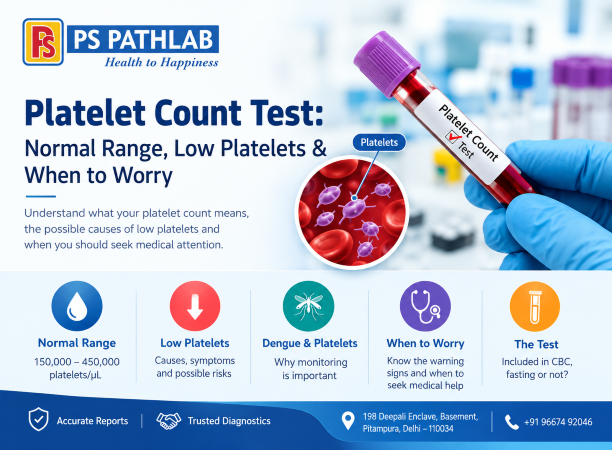
Understanding platelet levels, symptoms of low platelets, and the importance of timely blood testing
Platelets are tiny blood cells that play an important role in stopping bleeding and helping blood clots form. A platelet count test measures the number of platelets in your blood and is commonly included in a Complete Blood Count (CBC) test.
A low or high platelet count may occur due to infections, nutritional deficiencies, certain medicines, or other medical conditions. Understanding your platelet count can help you and your doctor decide whether further evaluation is needed.
At PS PathLab, we provide reliable blood testing services to help patients monitor their health through accurate laboratory investigations.
🩸 What Is a Platelet Count Test?
A platelet count test is a blood test that measures the number of platelets present in a specific volume of blood.
Platelets, also called thrombocytes, help your body control bleeding. When a blood vessel is injured, platelets gather at the site and help form a clot.
A platelet count is generally reported as part of a CBC test, which also measures red blood cells, white blood cells, and hemoglobin.
Why Is a Platelet Count Test Done?
A doctor may recommend a platelet count test to:
- Check for unexplained bruising or bleeding.
- Investigate frequent nosebleeds.
- Monitor platelet levels during certain infections.
- Evaluate suspected blood disorders.
- Monitor patients receiving treatments that may affect blood cells.
- Assess platelet levels during illnesses such as dengue.
📊 What Is the Normal Platelet Count Range?
For most healthy adults, the usual platelet count range is approximately
150,000–450,000 platelets per microliter of blood
The exact reference range may vary slightly between laboratories, so always check the range printed on your laboratory report.
Platelet Count General Interpretation Below 150,000/µL | Low platelet count, also called thrombocytopenia
150,000–450,000/µL | Typical adult reference range
Above 450,000/µL | High platelet count, also called thrombocytosis
Important: A platelet count alone does not establish a diagnosis. Your doctor will consider your symptoms, medical history, other blood test results, and whether the count is changing over time.
🔻 What Does a Low Platelet Count Mean?
A low platelet count is known as thrombocytopenia. It means the number of platelets in the blood is below the laboratory's normal reference range.
Low platelets do not always cause symptoms. Some people may have a mildly reduced count without experiencing any bleeding.
However, a significant decrease may increase the risk of bleeding, particularly when the platelet count becomes very low or other health conditions are present.
Common Causes of Low Platelets
Low platelet levels may be associated with:
- Viral infections: Some viral illnesses can temporarily reduce platelet counts.
- Dengue fever: Dengue can affect platelet levels, making monitoring important when clinically indicated.
- Vitamin deficiencies: Certain nutritional deficiencies, including vitamin B12 and folate deficiency, may affect blood cell production.
- Medications: Some medicines can affect platelet production or increase platelet destruction.
- Immune-related conditions: The immune system may sometimes destroy platelets.
- Liver and spleen disorders: These conditions can influence platelet levels.
- Bone marrow disorders: Problems affecting blood cell production may cause low platelet counts.
The cause cannot be determined from the platelet count alone. Medical evaluation may be necessary.
⚠️ Symptoms of Low Platelets
Some people with low platelets have no noticeable symptoms. When symptoms occur, they may include:
- Easy or unusual bruising.
- Small red or purple spots on the skin, known as petechiae.
- Frequent nosebleeds.
- Bleeding from the gums.
- Heavier-than-usual menstrual bleeding.
- Bleeding that takes longer than expected to stop.
- Blood in urine or stool in some cases.
Seek urgent medical attention for severe or uncontrolled bleeding, vomiting blood, black or bloody stools, severe headache, confusion, or other sudden concerning symptoms.
🦟 Platelet Count During Dengue Fever
Dengue is a mosquito-borne viral infection that can cause fever, body pain, headache, and sometimes a reduction in platelet count.
However, a low platelet count alone does not determine how severe dengue is. Doctors also consider warning signs, hydration, blood pressure, hematocrit, urine output, and the overall clinical condition.
Why Is Platelet Monitoring Important in Dengue?
A doctor may recommend repeat CBC testing during dengue to monitor:
- Platelet count.
- White blood cell count.
- Hematocrit.
- Changes in blood cell levels over time.
Platelet counts can change during the illness, so a single test result may not provide the complete picture.
Can Platelets Be Low Without Dengue?
Yes. Low platelets can occur for several reasons, including other infections, medications, nutritional deficiencies, and immune-related conditions.
Do not assume that a low platelet count automatically means dengue. A doctor may recommend appropriate tests, such as dengue NS1 antigen or antibody testing, depending on the stage of illness and symptoms.
🚨 When Should You Worry About a Low Platelet Count?
The level of concern depends on the platelet count, the cause, how quickly it is changing, and whether bleeding or other symptoms are present.
General clinical guidance:
- 150,000–100,000/µL: May represent mild thrombocytopenia. Medical review is useful, especially if the result is new or declining.
- 100,000–50,000/µL: Requires assessment based on the cause, symptoms, and clinical situation.
- Below 50,000/µL: Bleeding risk may increase, particularly with injury, medical procedures, or other risk factors.
- Below 20,000/µL: This is a very low platelet count and may require urgent medical assessment, even without obvious bleeding.
These are general guideposts, not personal treatment thresholds. People with active bleeding or concerning symptoms should seek immediate medical care regardless of the platelet count.
Do not take aspirin, ibuprofen, or other medicines that may increase bleeding risk without consulting a healthcare professional.
🧪 Is Platelet Count Included in a CBC Test?
Yes. A complete blood count, or CBC, generally includes a platelet count.
A CBC may provide information about:
- Hemoglobin.
- Red blood cell count.
- White blood cell count.
- Platelet count.
- Other red and white blood cell measurements.
Doctors may recommend a CBC to investigate symptoms such as fatigue, fever, unexplained bruising, or suspected infection.
At PS PathLab, patients can enquire about CBC testing and other blood investigations based on their healthcare needs.
⏱️ Does a Platelet Count Test Require Fasting?
Usually, fasting is not required for a platelet count test or a standard CBC.
However, if your doctor has prescribed additional tests along with the CBC, such as fasting blood glucose or a lipid profile, fasting may be required for those specific tests.
Always follow the preparation instructions provided by your doctor or laboratory.
🩺 How Can You Maintain Healthy Platelet Levels?
The right approach depends on the reason for an abnormal platelet count.
General steps include:
- Follow your doctor's advice regarding blood tests and treatment.
- Eat a balanced diet that provides adequate vitamins and minerals.
- Stay hydrated, especially during illnesses when your doctor recommends it.
- Avoid self-medication.
- Inform your doctor about medicines and supplements you are taking.
- Attend follow-up blood tests when recommended.
There is no single food or home remedy proven to rapidly correct every cause of low platelets. Treatment should focus on identifying and managing the underlying cause.
📍 Where Can You Get a Platelet Count Test in Pitampura, Delhi?
If your doctor has recommended a platelet count test or CBC, you can contact PS PathLab to inquire about blood testing services.
PS PathLab – Accurate Reports • Trusted Diagnostics
📍 Address: 198 Deepali Enclave, Basement, Pitampura, Delhi – 110034
📞 Contact: +91 96674 92046
🌐 Website: www.pspathlab.com
You can contact PS PathLab to inquire about test availability, preparation requirements, and sample collection services.
Frequently Asked Questions About Platelet Count
1. What is the normal platelet count range?
The usual adult reference range is approximately 150,000–450,000 platelets per microliter of blood. The range may vary by laboratory.
2. What does a low platelet count mean?
It means the platelet level is below the laboratory's reference range. It may be caused by infections, medications, nutritional deficiencies, immune conditions, or other medical problems.
3. Is a platelet count of 100,000 dangerous?
A count of 100,000/µL is below the usual adult reference range. Its significance depends on symptoms, the underlying cause, and whether the count is falling. Consult a doctor for appropriate evaluation.
4. Can dengue cause low platelets?
Yes. Dengue can cause a reduction in platelet count. However, platelet count alone does not determine dengue severity.
5. Is platelet count included in a CBC?
Yes. Platelet count is generally one of the measurements included in a complete blood count.
6. Do I need to fast before a platelet count test?
Usually, no. Fasting may be necessary if other tests requiring fasting are performed at the same time.
7. When should I seek medical help for low platelets?
Seek urgent medical attention for uncontrolled bleeding, blood in vomit or stool, severe headache, confusion, or other serious symptoms. Even without symptoms, a very low platelet count requires prompt medical assessment.
8. Where can I get a platelet count test in Pitampura?
You can contact PS PathLab, 198 Deepali Enclave, Basement, Pitampura, Delhi, to inquire about platelet count and CBC testing.


