
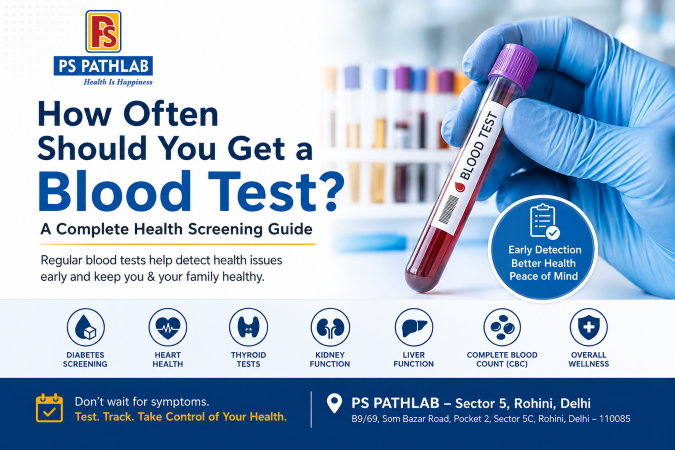
Regular blood tests are an important part of preventive healthcare. They can help doctors monitor your overall health, identify potential problems early, and track conditions such as diabetes, high cholesterol, thyroid disorders, anemia, and nutritional deficiencies.
But how often should you get a blood test? The answer depends on your age, health history, lifestyle, medications, risk factors, and your doctor's recommendations.
In this guide, PS PathLab explains how frequently different blood tests may be needed and which tests are commonly included in a routine health checkup.
How Often Should You Get a Blood Test?
For many healthy adults, a routine health checkup once a year can be a useful opportunity to discuss whether blood tests are appropriate.
However, there is no single blood test schedule that is right for everyone.
You may need to test more frequently if you:
- Have diabetes, high blood pressure, thyroid disease, or high cholesterol
- Have a family history of certain diseases
- Take long-term medications
- Have symptoms such as unexplained fatigue or weight changes
- Are pregnant or planning pregnancy
- Have previously abnormal test results
- Are over a certain age or have specific health risks
Your doctor can recommend the appropriate tests and frequency based on your individual needs.
Common Blood Tests for a Routine Health Checkup
Depending on your age and health profile, a routine health screening may include:
1. Complete Blood Count (CBC)
A CBC measures different types of blood cells, including red blood cells, white blood cells, and platelets.
It can help evaluate conditions such as anemia, infections, and other blood-related abnormalities.
2. Blood Sugar Test
Blood glucose testing helps assess blood sugar levels and can be used to screen for or monitor diabetes.
Common tests include
- Fasting Blood Sugar (FBS)
- Random Blood Sugar (RBS)
- HbA1c
People at increased risk of diabetes may require testing more regularly.
3. Lipid Profile
A lipid profile measures blood fats such as
- Total cholesterol
- LDL cholesterol
- HDL cholesterol
- Triglycerides
Regular cholesterol testing can help assess cardiovascular risk and guide lifestyle or medical treatment when needed.
4. Thyroid Function Tests
Thyroid tests such as TSH, T3, and T4 may be recommended when someone has symptoms or risk factors associated with thyroid problems.
People already diagnosed with thyroid disorders may require periodic monitoring as advised by their doctor.
5. Liver Function Tests
Liver function tests can help evaluate liver health and may be recommended for people with certain symptoms, medical conditions, alcohol-related risks, or medications that can affect the liver.
6. Kidney Function Tests
Kidney-related blood tests may include measurements such as creatinine and urea.
People with diabetes, high blood pressure, kidney disease, or other risk factors may need regular kidney monitoring.
7. Vitamin and Mineral Tests
Depending on symptoms and risk factors, doctors may recommend tests for nutrients such as
- Vitamin B12
- Vitamin D
- Iron
- Ferritin
- Calcium
These tests are not necessarily required for everyone every year.
How Often Should You Get Blood Tests by Age?
There is no universal testing schedule based solely on age, but age can influence which screenings are appropriate.
In Your 20s
Healthy adults may not need frequent blood testing if they have no symptoms or risk factors. Routine checkups can help determine whether testing is necessary.
In Your 30s
Regular health assessments become increasingly useful. Depending on your risk factors, your doctor may recommend monitoring blood sugar, cholesterol, thyroid function, or other markers.
In Your 40s
Screening for conditions such as diabetes and cardiovascular risk may become more important, particularly if you have a family history, excess weight, high blood pressure, or other risk factors.
In Your 50s and Beyond
Regular preventive healthcare becomes increasingly important. Your doctor may recommend a broader range of blood tests and other age-appropriate screenings based on your personal health profile.
Do Healthy People Need Blood Tests Every Year?
Not necessarily.
An annual health checkup does not automatically mean that every blood test needs to be performed every year.
Some tests may be appropriate at longer intervals for low-risk individuals, while people with certain conditions may need testing more frequently.
The right frequency depends on:
- Previous test results
- Age
- Family history
- Lifestyle
- Existing health conditions
- Medications
- Symptoms
- Individual risk factors
When Should You Get a Blood Test More Frequently?
Your doctor may recommend more frequent testing if you have an existing medical condition or are monitoring a specific health concern.
For example, people managing diabetes may need regular blood glucose or HbA1c monitoring. Someone taking medication for high cholesterol may also need periodic lipid testing to evaluate treatment.
If you experience persistent symptoms such as unusual tiredness, unexplained weight changes, excessive thirst, frequent urination, dizziness, or other concerning changes, speak with a healthcare professional about whether testing is appropriate.
Can a Blood Test Detect Health Problems Early?
Blood tests can provide valuable information about many aspects of health. They may identify abnormal levels that require further evaluation, sometimes before noticeable symptoms develop.
However, a blood test cannot detect every disease, and a normal result does not guarantee that a person has no health problems.
Blood tests should therefore be interpreted together with your symptoms, medical history, physical examination, and other appropriate investigations.
Should You Get a Full-Body Blood Test Every Year?
A "full body blood test" is commonly used to describe a package containing multiple laboratory tests.
However, more tests are not always better.
The ideal health screening package should be based on your age, health history, risk factors, and doctor's recommendations rather than simply choosing the largest number of tests.
A diagnostic laboratory can help you understand what tests are included in a package, while your healthcare professional can advise whether those tests are appropriate for you.
Frequently Asked Questions
1. How often should you get a blood test?
Many healthy adults discuss routine blood testing during an annual health checkup, but the exact frequency depends on individual health and risk factors.
2. Do I need a blood test every year?
Not everyone needs the same blood tests every year. Your doctor can recommend an appropriate schedule based on your health profile.
3. What blood tests should I get annually?
Depending on your circumstances, tests such as CBC, blood glucose, HbA1c, lipid profile, kidney function, liver function, or thyroid tests may be considered.
4. How often should cholesterol be checked?
The frequency depends on your cardiovascular risk, previous results, age, and whether you are receiving treatment for high cholesterol.
5. How often should blood sugar be tested?
People with diabetes or increased diabetes risk may need more frequent testing. Your healthcare professional can recommend the appropriate schedule.
6. Should I get a full-body blood test every year?
Not necessarily. The appropriate tests depend on your individual health needs and risk factors.
7. Can routine blood tests detect diabetes?
Blood glucose and HbA1c tests can help screen for and monitor diabetes.
8. Can a blood test detect anemia?
A CBC can provide important information when evaluating possible anemia, while additional tests may be recommended to identify the underlying cause.
9. Should women get regular blood tests?
Women may need different laboratory tests depending on age, pregnancy status, symptoms, nutritional needs, and medical history.
10. Should men get regular blood tests?
Men can also benefit from appropriate preventive screening based on age, health history, symptoms, and individual risk factors.
Takeaway: How Often Should You Get a Blood Test?
There is no one-size-fits-all blood test schedule.
For many people, a regular health checkup can be a good time to review whether blood testing is appropriate. People with chronic conditions, symptoms, abnormal previous results, or specific risk factors may need testing more frequently.
The most important step is not simply getting more tests—it's getting the right tests at the right time.