
Young Adults' Heart Attack: Kaunse Blood Tests Early Warning De Sakte Hain?
Reviewed by: PS PathLab Healthcare Team
Introduction
Heart attacks are often associated with older adults, but cardiovascular problems can also affect young people in their 20s, 30s, and 40s. Increasing stress, unhealthy eating habits, smoking, lack of physical activity, diabetes, high blood pressure, and genetic factors can contribute to cardiovascular risk.
Many young adults assume that they are too young to experience heart problems. However, maintaining heart health and understanding personal risk factors is important at every age.
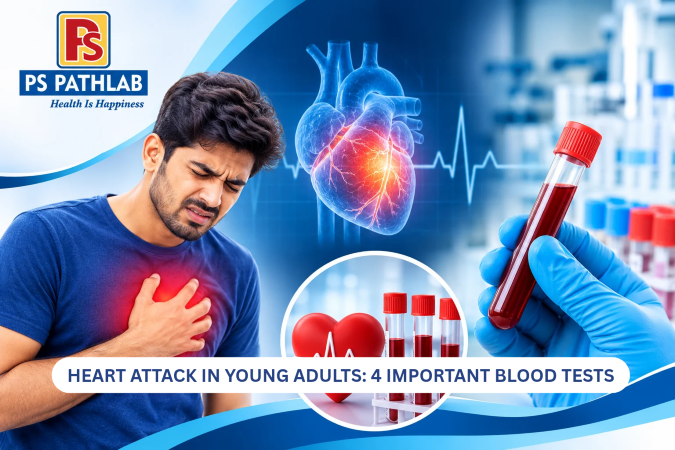
Certain blood tests can help doctors assess cardiovascular risk, identify inflammation-related markers, and detect heart muscle injury. Four important tests include troponin, lipoprotein(a) [Lp(a)], hs-CRP, and homocysteine.
Let's understand how these tests work and when they may be recommended.
1. Why Are Heart Attacks Increasingly Important to Discuss Among Young Adults?
Heart-related problems in younger individuals may be associated with several lifestyle and medical factors.
Common risk factors include:
- Smoking and tobacco consumption
- Excessive stress and poor sleep
- Sedentary lifestyle and lack of exercise
- High cholesterol levels
- Diabetes and high blood pressure
- Obesity and unhealthy eating habits
- Family history of early heart disease
- Certain inherited cardiovascular conditions
Not everyone with these risk factors will develop heart disease. However, understanding them can help individuals take preventive steps.
2. Four Important Blood Tests Related to Heart Health
A. Troponin Test—Helps Detect Heart Muscle Injury
Troponin is a protein found in heart muscle cells. When the heart muscle is damaged, troponin can enter the bloodstream.
Doctors commonly recommend a Troponin I or Troponin T test when a heart attack or other heart muscle injury is suspected.
Why is the Troponin test important?
- Helps detect heart muscle injury.
- Supports the diagnosis of a suspected heart attack.
- Helps doctors assess changes in heart muscle damage.
- High-sensitivity Troponin tests can detect even small amounts of heart muscle injury.
Important: Troponin is primarily used to investigate suspected acute heart injury. It is not a routine test for predicting future heart attacks in healthy individuals.
B. Lipoprotein(a)—Lp(a) Test
Lipoprotein(a), commonly known as Lp(a), is a type of cholesterol-containing particle in the blood. Its level is largely influenced by genetics.
High Lp(a) levels are associated with an increased risk of cardiovascular conditions, including heart attacks and stroke.
Why should young adults consider Lp(a) testing?
- Helps identify inherited cardiovascular risk.
- Provides additional information beyond a standard cholesterol profile.
- Can be particularly useful when there is a family history of early heart disease.
- Helps doctors develop an appropriate preventive health strategy.
Lp(a) is generally measured through a blood test. It is often worth discussing at least once in adulthood, particularly for people with a family history of cardiovascular disease.
C. hs-CRP Test – High-Sensitivity C-Reactive Protein
hs-CRP stands for High-Sensitivity C-Reactive Protein. It measures small amounts of C-reactive protein, a marker associated with inflammation in the body.
Inflammation may contribute to cardiovascular risk, and hs-CRP can provide additional information during heart health assessment.
Benefits of the hs-CRP test:
- Measures low levels of inflammation.
- May help assess cardiovascular risk.
- Provides additional information alongside cholesterol and other risk factors.
- Can support a doctor's overall preventive health assessment.
Important: An elevated hs-CRP level does not confirm heart disease. Infections and other inflammatory conditions can also increase this marker.
D. Homocysteine Test—Understanding Cardiovascular Risk
Homocysteine is an amino acid naturally present in the blood. Elevated levels may be associated with cardiovascular risk and can sometimes indicate deficiencies of vitamin B12, vitamin B6, or folate.
Why is Homocysteine testing useful?
- Helps identify elevated homocysteine levels.
- May provide additional information about cardiovascular risk.
- Can help investigate certain nutritional deficiencies.
- May be recommended in selected cases based on medical history.
Homocysteine testing is not a standalone test for diagnosing or predicting a heart attack.
3. Comparison: Troponin vs Lp(a) vs hs-CRP vs Homocysteine
Blood Test: What Does It Measure? Main Purpose
Troponin | Heart muscle injury marker | Helps investigate a suspected heart attack
Lp(a) | Lipoprotein particle | Assesses inherited cardiovascular risk
hs-CRP | Inflammation marker | Provides additional cardiovascular risk information
Homocysteine | Amino acid level | Provides additional metabolic and cardiovascular risk information
Each test serves a different purpose. A doctor decides which tests are appropriate based on symptoms, age, medical history, and risk factors.
4. What Are the Warning Signs of a Heart Attack in Young Adults?
Heart attack symptoms should never be ignored, even in younger individuals.
Watch out for:
- Chest pain, pressure, or tightness
- Pain spreading to the arms, neck, jaw, or back
- Sudden breathlessness
- Cold sweating
- Dizziness or fainting
- Unusual nausea or vomiting
- Sudden unexplained weakness
Medical emergency: If you experience symptoms that could indicate a heart attack, seek emergency medical attention immediately. Do not wait for a blood test or routine laboratory appointment.
An ECG, serial troponin testing, and clinical assessment may be required by the treating medical team.
5. At What Age Should You Start Heart Health Screening?
There is no single age at which everyone needs the same cardiac blood tests.
However, young adults can discuss preventive cardiovascular assessment with their doctors, especially if they have:
- A family history of early heart disease.
- Diabetes or high blood pressure.
- High cholesterol.
- Smoking or tobacco habits.
- Obesity or other metabolic risk factors.
- Previously identified abnormal cardiovascular markers.
A standard preventive assessment may include blood pressure measurement, lipid profile, blood glucose or HbA1c, and other investigations depending on individual requirements.
Additional tests such as Lp(a), hs-CRP, and homocysteine may be considered when clinically appropriate.
6. How Can You Reduce Your Heart Disease Risk?
Along with appropriate medical screening, healthy daily habits can support cardiovascular health.
- Eat a balanced diet with vegetables, fruits, whole grains, and healthy fats.
- Exercise regularly, as recommended by your healthcare professional.
- Avoid smoking and tobacco.
- Maintain a healthy body weight.
- Monitor blood pressure, cholesterol, and blood sugar.
- Get adequate sleep and manage stress.
- Follow your doctor's advice regarding preventive screening.
Remember, blood tests are only one part of understanding your heart health.
7. Frequently Asked Questions (FAQs)
Q1. Can young adults have a heart attack?
Yes. Heart attacks can occur in young adults due to genetic factors, smoking, diabetes, high cholesterol, high blood pressure, and other cardiovascular risk factors.
Q2. Which blood test can detect a heart attack?
Troponin I and Troponin T tests help detect heart muscle injury and are commonly used when a heart attack is suspected. Results must be interpreted alongside symptoms, ECG findings, and clinical assessment.
Q3. Can Lp(a) predict heart attack risk?
Lp(a) can help identify inherited cardiovascular risk. Higher levels are associated with increased risk of heart disease, but the result alone cannot predict whether or when someone will experience a heart attack.
Q4. What is the hs-CRP test used for?
The hs-CRP test measures low levels of inflammation and may provide additional information about cardiovascular risk when combined with other clinical factors.
Q5. Does high homocysteine mean I have heart disease?
No. Elevated homocysteine does not confirm heart disease. It may be associated with cardiovascular risk and can also be linked to certain vitamin deficiencies.
Q6. Should healthy people get an Lp(a) test?
Many adults may benefit from discussing a once-in-adulthood Lp(a) measurement with their doctor, especially if they have a family history of premature cardiovascular disease.
Q7. Are these four blood tests enough to check heart health?
No. These tests do not provide a complete picture of cardiovascular health. A doctor may also recommend an ECG, lipid profile, blood pressure assessment, blood sugar testing, echocardiography, or other investigations depending on individual needs.
Q8. Where can I get blood tests in Pitampura, Delhi?
You can contact PS PathLab in Pitampura, Delhi, for information about available diagnostic tests, sample collection, and home collection services.
Conclusion: Don't Ignore Your Heart Health at Any Age
Heart health deserves attention at every stage of life. Understanding cardiovascular risk factors and getting appropriate medical advice can help individuals make informed decisions about preventive care.
Tests such as troponin, Lp(a), hs-CRP, and homocysteine provide different types of information about heart muscle injury and cardiovascular risk. However, no single blood test can guarantee that a heart attack will or will not occur.
Choose informed healthcare. Choose preventive screening. Choose PS PathLab.
About PS PathLab
PS PathLab provides diagnostic testing services to support informed healthcare decisions. We offer a range of blood investigations and diagnostic services, including preventive health testing and home sample collection.
PS PathLab – Health Is Happiness
📍 Address: 198 Deepali Enclave, Pitampura, Basement, Delhi – 110034
📞 Contact: +91 96674 92046
🌐 Website: https://www.pspathlab.com