
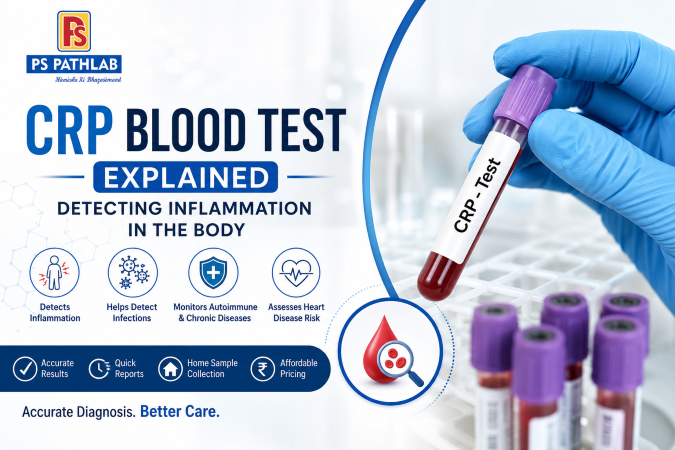
Inflammation is your body's natural defense against infections, injuries, and illnesses. However, persistent or excessive inflammation can indicate an underlying health problem. One of the most effective ways to detect inflammation is through a C-Reactive Protein (CRP) blood test.
At PS PathLab, we provide accurate CRP testing with quick reports and professional diagnostic services to help doctors diagnose and monitor various inflammatory conditions.
What is a CRP blood test?
A CRP (C-reactive protein) blood test measures the level of C-reactive protein in your blood. CRP is a protein produced by the liver when your body experiences inflammation.
Higher CRP levels usually indicate that your body is fighting an infection, inflammation, or tissue injury. While the CRP test cannot identify the exact cause, it helps doctors determine whether inflammation is present and how severe it may be.
Why Do Doctors Recommend a CRP Test?
A doctor may recommend a CRP test to:
- Detect inflammation in the body
- Diagnose bacterial or severe viral infections
- Monitor autoimmune diseases
- Evaluate rheumatoid arthritis or lupus
- Assess inflammatory bowel disease (IBD)
- Monitor recovery after surgery
- Check response to treatment
- Evaluate heart disease risk (using hs-CRP)
What Diseases Can a CRP Test Help Detect?
A CRP test may assist in diagnosing or monitoring:
- Bacterial infections
- Viral infections
- Rheumatoid arthritis
- Lupus (SLE)
- Inflammatory bowel disease (Crohn's disease and ulcerative colitis)
- Sepsis
- Osteomyelitis (bone infection)
- Pneumonia
- Heart disease risk (hs-CRP)
- Certain cancers (along with other diagnostic tests)
Note: A CRP test alone cannot diagnose a specific disease. It must always be interpreted alongside symptoms, medical history, and other laboratory investigations.
What is the normal CRP level?
The normal CRP level may vary slightly depending on the laboratory.
CRP Level Interpretation: Less than 10 mg/L | Normal
10–40 mg/L | Mild inflammation or infection
40–200 mg/L | Significant inflammation or bacterial infection
Above 200 mg/L | Severe infection or major inflammation
Your doctor will interpret your report based on your overall health condition.
Symptoms That May Require a CRP Test
Your doctor may suggest a CRP test if you have:
- Persistent fever
- Fatigue
- Joint pain
- Swelling
- Muscle aches
- Chronic infections
- Unexplained weight loss
- Autoimmune disease symptoms
- Severe body pain
- Long-lasting inflammation
Is Fasting Required for a CRP Blood Test?
No.
A standard CRP blood test generally does not require fasting. However, if your doctor has prescribed additional blood tests, such as a lipid profile or blood sugar test, fasting may be necessary.
Always follow your doctor's instructions before your test.
What Causes High CRP Levels?
High CRP levels can occur due to:
- Bacterial infections
- Viral infections
- Rheumatoid arthritis
- Lupus
- Inflammatory bowel disease
- Obesity
- Smoking
- Diabetes
- Heart disease
- Surgery or trauma
- Certain cancers
How Can You Reduce High CRP Levels?
Reducing CRP depends on treating the underlying condition. Healthy lifestyle changes can also help lower inflammation.
Tips to reduce CRP naturally:
- Eat an anti-inflammatory diet
- Exercise regularly
- Maintain a healthy weight
- Quit smoking
- Manage diabetes
- Get enough sleep
- Reduce stress
- Follow your doctor's treatment plan
Never self-medicate based on a CRP report.
CRP Test vs. ESR Test
CRP Test: Detects active inflammation quickly | ESR Test: Detects inflammation more slowly
Changes rapidly with infection | Takes longer to rise and fall
More sensitive for acute inflammation | Better for long-term inflammatory conditions
Used to monitor treatment response | Often used alongside CRP
Doctors may recommend both tests for a more comprehensive evaluation.
How is a CRP test performed?
The procedure is simple and usually takes less than five minutes:
- A healthcare professional cleans the skin.
- A small blood sample is drawn from a vein in your arm.
- The sample is sent to the laboratory.
- Reports are generally available within a short time, depending on the testing schedule.
Why Choose PS PathLab for Your CRP Test?
At PS PathLab, we are committed to delivering reliable diagnostic services with patient convenience in mind.
Our advantages:
- NABL-standard quality practices
- Experienced laboratory professionals
- Accurate and reliable test reports
- Affordable pricing
- Home sample collection available
- Fast report delivery
- Hygienic sample collection
- Trusted diagnostic laboratory in Delhi
Frequently Asked Questions (FAQs)
1. What is a CRP blood test used for?
It measures inflammation in the body and helps doctors diagnose infections, autoimmune diseases, and inflammatory conditions.
2. Is fasting required before a CRP test?
No, fasting is usually not required unless your doctor has advised other fasting blood tests.
3. Can a CRP test detect infection?
Yes. High CRP levels often indicate bacterial or severe viral infections.
4. Is a high CRP level dangerous?
A high CRP level is not a disease itself but indicates inflammation that requires medical evaluation.
5. What is the normal CRP range?
Generally, a CRP level below 10 mg/L is considered normal, though reference ranges may vary by laboratory.
6. What is the difference between CRP and ESR?
CRP responds more quickly to inflammation, while ESR changes more slowly and is often used to monitor chronic inflammatory conditions.
7. Can I book a CRP test from home?
Yes. PS PathLab offers convenient home sample collection in many areas of Delhi.
Book Your CRP Blood Test at PS PathLab
If you are experiencing persistent fever, unexplained pain, joint swelling, or symptoms of inflammation, don't ignore them. Early diagnosis can help identify the underlying cause and support timely treatment.
PS PathLab provides accurate CRP blood testing with experienced professionals, modern laboratory standards, quick reporting, and home sample collection services across Delhi.
Book your CRP blood test with PS PathLab today and take the first step toward better health.