
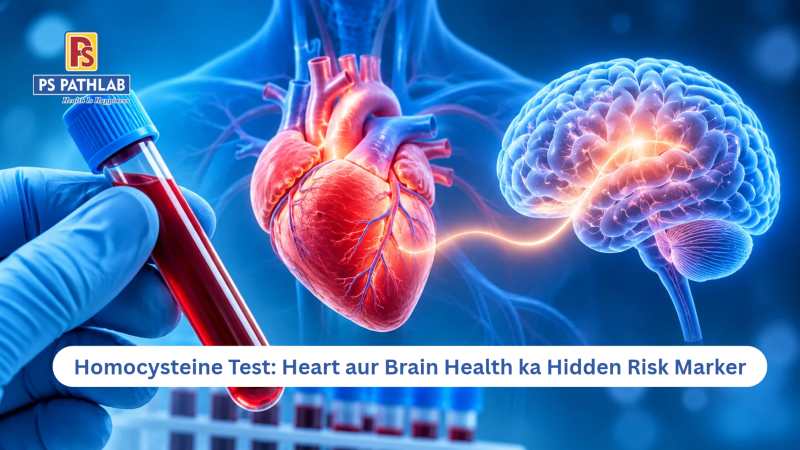
Homocysteine Test: Heart aur Brain Health ka Hidden Risk Marker
Your heart health is not just about cholesterol! Sometimes, certain hidden markers in your blood can provide additional information about your cardiovascular health. One such marker is homocysteine.
Many people regularly check their cholesterol, blood sugar and blood pressure but may not know about homocysteine. High levels of this amino acid in the blood may be associated with an increased risk of cardiovascular problems, including heart disease and stroke.
So, what exactly is the homocysteine test? Why is it important, and who should consider getting tested?
Let's understand everything in simple language.
What Is a Homocysteine Test?
A homocysteine test is a blood test that measures the amount of homocysteine present in your bloodstream.
Homocysteine is a type of amino acid naturally produced by the body during protein metabolism. Normally, the body breaks it down with the help of certain vitamins, particularly:
- Vitamin B12
- Vitamin B6
- Folate (Vitamin B9)
When these vitamins are insufficient, homocysteine levels may increase.
A higher-than-normal homocysteine level may indicate vitamin deficiencies or other health concerns and can be associated with increased cardiovascular risk.
Why Is Homocysteine Called a Hidden Heart Risk Marker?
Homocysteine is often discussed in relation to cardiovascular health because elevated levels have been associated with damage to blood vessel function and an increased risk of vascular problems.
Some potential health associations include:
1. Heart Health: Elevated Homocysteine may be associated with cardiovascular disease risk.
2. Stroke Risk: Higher levels have been linked with an increased risk of certain types of stroke.
3. Blood Vessel Health: High homocysteine may affect the inner lining of blood vessels.
4. Brain Health: Homocysteine levels have been associated with cognitive health, although high levels do not necessarily mean someone will develop memory problems or neurological disease.
Important: Homocysteine is a risk-associated biomarker, not a standalone test to diagnose heart disease or predict a heart attack.
What Are the Causes of High Homocysteine Levels?
Several factors may contribute to elevated homocysteine levels.
Common causes include:
- Vitamin B12 deficiency
- Vitamin B6 deficiency
- Folate deficiency
- Kidney function problems
- Genetic factors affecting Homocysteine metabolism
- Certain medications and medical conditions
- Smoking and other lifestyle-related factors
If homocysteine levels are elevated, a doctor may recommend additional investigations to identify the underlying cause.
What Is the Normal Homocysteine Level?
Homocysteine levels are generally measured in micromoles per liter (µmol/L).
A commonly used reference range for adults is approximately 5–15 µmol/L, although the actual reference interval can vary between laboratories and testing methods.
Homocysteine Level General Interpretation
Below 5 µmol/L | Lower than commonly expected
5–15 µmol/L | Commonly used reference range
Above 15 µmol/L | Elevated level
Always interpret your result using the reference range printed on your laboratory report and consult your healthcare professional.
What Are the Symptoms of High Homocysteine?
One important thing to understand is that elevated homocysteine usually does not cause specific symptoms on its own.
However, the underlying vitamin deficiencies or health conditions may produce symptoms such as:
- Unusual tiredness and weakness
- Tingling or numbness in hands and feet
- Difficulty concentrating
- Memory-related concerns
- Pale skin
- Unexplained fatigue
These symptoms can have many possible causes. A blood test and medical evaluation are needed to identify the reason.
Who Should Get a Homocysteine Test?
A doctor may recommend a homocysteine blood test for individuals who:
- Have suspected vitamin B12, B6, or folate deficiency.
- Have unexplained elevated homocysteine levels in previous reports.
- Have certain risk factors for cardiovascular disease.
- Have a family history of certain cardiovascular or metabolic conditions.
- Need further evaluation of specific nutritional or metabolic concerns.
The test is not necessary for everyone. Your doctor can determine whether it is appropriate based on your medical history and risk factors.
Is Fasting Required for a Homocysteine Blood Test?
Fasting requirements can vary depending on the laboratory's testing protocol.
Some laboratories may recommend fasting before sample collection. It is best to confirm the preparation instructions with your diagnostic laboratory before visiting.
Which Other Blood Tests May Be Recommended Along With Homocysteine?
Depending on your symptoms and medical history, your doctor may recommend additional tests to understand your overall health.
Blood Test: What It Helps Evaluate
Vitamin B12 Test | Vitamin B12 Levels
Vitamin B6 Test | Vitamin B6 status
Folate Test | Folate deficiency
Lipid Profile | Cholesterol and triglyceride levels
hs-CRP Test | Inflammation associated with cardiovascular risk
Lipoprotein(a) Test | Inherited cardiovascular risk factor
Kidney Function Test (KFT) | Kidney Function
These tests provide different information and should be selected according to medical advice.
How Can You Maintain Healthy Homocysteine Levels?
Maintaining adequate vitamin levels and following a healthy lifestyle may help support normal homocysteine metabolism.
Consider these healthy habits:
- Include vitamin B12-rich foods or appropriately fortified foods in your diet.
- Consume folate-rich foods such as green leafy vegetables, beans, and lentils.
- Include vitamin B6 sources such as chickpeas, potatoes, and bananas.
- Stay physically active.
- Avoid smoking.
- Follow a balanced diet.
- Get tested when recommended by your doctor.
People following a vegan diet should pay particular attention to reliable vitamin B12 sources and supplementation as advised by a healthcare professional.
Do not start high-dose vitamin supplements without medical guidance.
Where Can You Get a Homocysteine Test in Pitampura, Delhi?
If your doctor has recommended a homocysteine blood test, choosing a reliable diagnostic laboratory is important.
PS PathLab – Pitampura, Delhi, offers diagnostic testing services with a focus on accurate reporting, trusted diagnostics, and convenient sample collection.
Why choose PS PathLab?
- Convenient diagnostic testing services
- Free Home Sample Collection
- Professional sample collection
- Convenient report access
- Location: 198 Deepali Enclave, Pitampura, Basement, Delhi – 110034
Book Your Blood Test with PS PathLab Today!
Website: https://www.pspathlab.com/
Contact: +91 96674 92046
Home sample collection is subject to service availability and applicable terms. Confirm the homocysteine test availability and preparation requirements before booking.
Frequently Asked Questions (FAQs)
1. What is a homocysteine blood test used for?
A homocysteine blood test measures the amount of homocysteine in the blood. It may help evaluate certain vitamin deficiencies and provide additional information about cardiovascular risk.
2. What is the normal range of homocysteine?
A commonly used adult reference range is approximately 5–15 µmol/L. However, ranges may vary between laboratories.
3. Can high homocysteine cause a heart attack?
Elevated Homocysteine has been associated with cardiovascular disease risk, but it does not directly diagnose or predict a heart attack.
4. Is homocysteine linked to vitamin B12 deficiency?
Yes. Vitamin B12 helps the body metabolize homocysteine. Vitamin B12 deficiency can contribute to elevated homocysteine levels.
5. Does high homocysteine affect brain health?
Elevated Homocysteine has been associated with cognitive health concerns in some studies. However, it does not independently diagnose brain disease.
6. Can Homocysteine levels be reduced naturally?
A balanced diet containing adequate B12, B6, and folate, along with healthy lifestyle habits, may help maintain normal levels. Treatment depends on the underlying cause.
7. Is the homocysteine test done through a blood sample?
Yes. It is a laboratory blood test performed using a blood sample collected from a vein.
8. Where can I book a homocysteine test in Pitampura?
You can contact PS PathLab, Pitampura, Delhi, at +91 96674 92046 to confirm availability and booking details.